
Category: News

  • The Neuroscience of Journalling

    The Neuroscience of Journalling

    Journaling and Its Psychological Effects: How Writing Can Improve Your Mental Health (With Daily Tips)

    In the digital age where stress, anxiety, and emotional burnout are increasingly common, journaling offers a powerful — yet often overlooked — way to manage mental health. Backed by psychological research, journaling helps you process thoughts, regulate emotions, and build resilience. It’s free, simple, and highly adaptable to your personal needs.

    About a year ago, I hit a wall. I was working 60+ hour weeks, dealing with relationship tension, and trying to pretend everything was fine. Inside, I felt anxious all the time, emotionally numb, and completely exhausted. I didn’t want to talk to anyone about it — I didn’t have the words. That’s when I started journaling again — something I hadn’t done since college.”

    “At first, I just brain-dumped every morning. It wasn’t pretty or profound — just raw, messy thoughts. But within a few weeks, patterns started to emerge. I realized how often I used perfectionism to avoid my feelings. I also noticed how disconnected I had become from the things I loved — drawing, hiking, quiet mornings.”

    “Journaling helped me slow down enough to hear what I needed. I started setting boundaries at work, being more honest in my relationship, and taking better care of myself. It wasn’t a magical fix, but it gave me a safe space to come back to each day — a place where I could show up as I was, not who I thought I ‘should’ be.”

    “Now, journaling is part of my morning routine. Sometimes it’s just one sentence. Sometimes it’s three pages. But every time, it brings me back to myself.” Maya, creative professional 32 yrs.

    Journaling is more than a habit or hobby; it is a neuroscientific and psychological intervention with measurable effects. By engaging brain systems related to emotion, memory, and executive function, journaling offers a low-cost, accessible, and deeply personal path to mental wellness. Whether you’re processing trauma, managing anxiety, or simply seeking clarity, a blank page can be one of the most powerful tools in your mental health toolkit.

    The Neuroscience of Journalling

    1. Activation of the Prefrontal Cortex

    When you write about your thoughts and emotions, particularly in a structured or reflective way, it engages the prefrontal cortex — the brain region involved in reasoning, planning, and emotional regulation. This activation helps you make sense of emotional experiences, reducing their intensity and helping to process them more rationally.

    A 2007 UCLA study led by Dr. Matthew Lieberman found that affect labeling — the act of putting feelings into words — reduces activity in the amygdala, the brain’s threat detection center, while increasing activity in the prefrontal cortex. In simple terms, writing about emotions can calm the brain’s alarm system.

    2. Improved Working Memory and Executive Function

    Journaling can offload mental clutter, allowing the brain to better focus on higher-order tasks. This is particularly relevant for people with anxiety, whose working memory can be hijacked by intrusive thoughts. Regular expressive writing has been shown to free up cognitive resources, improving attention and problem-solving.

    3. Neuroplasticity and Rewiring the Brain

    Consistent journaling promotes neuroplasticity — the brain’s ability to form and reorganize synaptic connections in response to learning or experience. Practices like gratitude journaling, for example, can strengthen neural pathways associated with positive emotions and resilience. Over time, this can subtly shift one’s default mindset away from negativity and rumination toward more balanced or optimistic thinking.

    Psychological Benefits of Journaling

    1. Emotional Regulation

    Writing helps translate overwhelming emotions into language. This process engages the rational part of the brain (prefrontal cortex), which soothes emotional responses from the more reactive limbic system. Over time, journaling helps you respond to emotions thoughtfully instead of reacting impulsively.

    The benefits are reduced emotional outbursts, better mood management, and increased inner calm.

    2. Reduced Anxiety and Depression

    Expressive journaling — writing about difficult thoughts and emotions — has been shown to lower symptoms of anxiety and depression. According to studies by Dr. James Pennebaker, people who journal regularly experience improved emotional and even physical health.

    The benefits are less rumination, better stress response, and more psychological resilience.

    3. Increased Self-Awareness

    Journaling acts like a mirror for the mind. You begin to notice patterns in your thoughts, behaviors, and emotional triggers. This heightened self-awareness can lead to better decision-making and personal growth.

    The benefits are you gain insight into what truly drives your emotions and actions.

    4. Improved Mental Clarity

    Journaling helps untangle complex thoughts. When you write, you create order out of chaos, which boosts mental clarity and makes problem-solving easier.

    The benefits are less mental clutter, better focus, and more confident choices.

    5. Stronger Sense of Gratitude and Positivity

    When you consistently reflect on what’s going well, your brain becomes better at spotting the good. Gratitude journaling rewires your brain to favour optimism over negativity.

    The benefits are enhanced mood, better relationships, and improved overall life satisfaction.

    Whether you’re navigating everyday stress or working through deeper emotional challenges, journaling can become a safe space for self-reflection, clarity, and healing. Below, we explore the psychological benefits of journaling and offer daily journaling tips to help you start and sustain the habit.

    Types of Journaling and Their Effects

    Different forms of journaling have different psychological and neurological effects:

    Goal-Oriented Journaling: Tracking achievements and plans; boosts motivation and cognitive focus.

    Expressive Writing: Writing about trauma or emotions; enhances emotional processing and reduces stress.

    Gratitude Journaling: Listing things you’re thankful for; increases positive affect and reduces depression.

    Reflective Journaling: Exploring thoughts and behaviors; supports learning, growth, and emotional insight.

    Practical Tips for Effective Journaling

    1. Be Consistent: Even a few minutes a day can have cumulative benefits.
    2. Don’t Censor Yourself: Let thoughts flow freely; this isn’t a writing contest.
    3. Use Prompts if Stuck: Try questions like “What am I feeling right now?” or “What do I need?”
    4. Write by Hand if Possible: While digital journaling is effective, handwriting may enhance emotional processing by engaging more brain areas.
    5. Keep it Private: The more honest you are, the more powerful the effect — so ensure your journal feels safe.

    Daily Journaling Tips for Mental Wellness

    Building a journaling habit doesn’t have to be time-consuming or overwhelming. Here are practical tips and prompt ideas to get you started — and keep going. You may even like to create a 7 day journalling challenge for yourself with the prompts

    1. Start Small — 5 Minutes is Enough

    You don’t need to write a novel. A few sentences can make a big difference. Set a timer for 5 minutes and write whatever comes to mind.

    Daily Prompt: “What’s one thing I’m feeling right now, and why might I be feeling it?”

    2. Gratitude Grounding

    Cultivate a mindset of appreciation and positivity which changes your neurological pathways.

    Writing down 3–5 things you’re grateful for each morning can set a positive tone for the day.

    Daily Prompts: “Today, I’m grateful for…” or “One small good thing that happened today/yesterday was…”

    • List 3 small things you’re grateful for today.
    • Who or what made your day a little better this week?
    • What’s something you often take for granted but deeply value?

    3. Brain Dump Before Bed

    If you struggle with overthinking at night, try a “brain dump” — writing everything that’s on your mind before sleep.

    Daily Prompt:“Right now, I need to let go of…” or “What’s weighing on me?”

    4. Emotional Release

    Write freely about what’s been bothering you — no filters.

    Daily Prompts:

    • What’s been weighing on me emotionally?
    • What do I wish I could say to someone — or myself?
    • What am I ready to let go of?

    5. Self Compassion

    Speak to yourself the way you’d speak to a friend.

    Prompts:

    • What have I been hard on myself about lately?
    • What would I say to a friend going through the same thing?
    • Today, I forgive myself for…
    • What would someone who loves me say to me right now?

    6. Clarifying Priorities

    Identify what truly matters and where your energy should go. What do you value? Where do you want to put your energy and focus?

    Prompts:

    • What are my current top 3 priorities?
    • Where am I spending time or energy that doesn’t serve me?
    • What would I do more of if I trusted myself?

    7: Visioning the Future

    Imagine and define what you want in the weeks or months ahead. Cultivating hope in the midst of overwhelm.

    Prompts:

    • In 3 months, how do I want to feel?
    • What kind of person am I becoming?
    • What’s one small step I can take this week to move toward that vision?

    Day of Reflection & Integration

    Look back at what you’ve written this week and reflect on the journey.

    Prompts:

    • What did I learn about myself this week?
    • What was the most surprising or powerful insight?
    • How can I continue supporting myself after this challenge?

    Staying Consistent

    • Set a specific time (e.g., after your morning coffee or before bed).
    • Keep your journal in sight — visual reminders work.
    • Use a digital app or physical notebook, depending on your preference.
    • Don’t aim for perfection — just write honestly.
    • Track your progress and how it is helping you – weekly

    Journaling is more than just writing — it’s an act of self-connection. With just a few minutes each day, you can reduce stress, gain emotional clarity, and take better care of your mental health. No fancy tools or deep writing skills required — just a willingness to pause, reflect, and be honest with yourself.

    Over time, you’ll likely find that your journal becomes a trusted companion — a space where your thoughts make sense, your emotions feel seen, and your growth is documented.

    __________________________________________________________________________________________

    Ready to Start?

    Grab a journal, make a time you can keep daily and simply start. use the prompts above if you need help daily.

    Write how it worked for you in the comments below, as we would love to hear.

    __________________________________________________________________________________________

    Bibliography

    Pennebaker, J.W., & Beall, S.K. (1986). Confronting a traumatic event: Toward an understanding of inhibition and disease.

    Lieberman, M.D., et al. (2007). Putting feelings into words: affect labeling disrupts amygdala activity in response to affective stimuli.

    Smyth, J.M. (1998). Written emotional expression: effect sizes, outcome types, and moderating variables.

  • The Neuroscience of Enquiry: How 4 Questions Can Rewire Your Brain

    The Neuroscience of Enquiry: How 4 Questions Can Rewire Your Brain

    Have you ever caught yourself spiralling into stress over a single thought? Maybe it’s “I’m not good enough,” or “They don’t respect me.” That one belief, left unchecked, can shape your emotions, your reactions, your body and even your relationships.


    A single unchecked thought can hijack your entire nervous system! One moment, you’re fine, and the next, you’re spiralling—heart pounding, stomach in knots, mind racing through every worst-case scenario like it’s training for the apocalypse.


    But what if questioning your thoughts could actually change your brain?
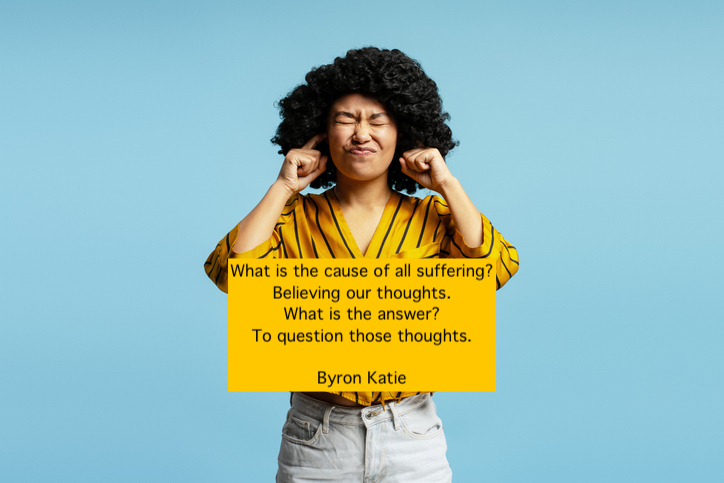
    This is where The Work of Byron Katie comes in—a deceptively simple practice that has profound effects on how we think, feel, and respond to life. And science backs it up. From neuroplasticity to emotional regulation, The Work of Byron Katie provides a profound mechanism that can reshape the brain.

    How Stressful Thoughts Get Stuck in the Brain


    Think of your brain like a well-worn hiking trail. Every time you believe a stressful thought, your brain strengthens that pathway and it gets more entrenched. It works like this:
    Negative Thought:“They don’t respect me.”
    Emotional Reaction: Anger, sadness, or withdrawal.
    Brain’s Response: The amygdala (your brain’s threat detector) lights up, reinforcing the belief.
    Cycle Continues: Over time, this thought becomes transparent and automatic.
    Your brain is designed to be efficient—it wants to protect you, so it strengthens beliefs that seem to “keep you safe.” The problem? Many of these thoughts aren’t true. They’re just interpretations of a reality.

    The Work as a Brain-Rewiring Tool


    Byron Katie’s four questionsand turnarounds might seem too simple to be life-changing, but let’s look at what they actually do to your brain:


    1️. Is it true? Interrupts automatic thinking. Forces your prefrontal cortex (the logical part of your brain) to pause instead of reacting.


    2️. Can you absolutely know that it’s true? Creates cognitive flexibility. The brain starts loosening its grip on rigid beliefs, making space for alternative perspectives.
    The first two questions force your prefrontal cortex (the rational part of the brain) to slow down and reconsider automatic assumptions. Our executive functioning, those ambassadors come back online. 


    3️. How do you react when you believe that thought? Activates self-awareness. Your body’s stress response becomes visible—this is where real change begins. The third question builds metacognition, making you more aware of how your thoughts shape your emotional state.


    4️. Who would you be without that thought? Stimulates neuroplasticity. Your brain starts rewiring new pathways, shifting toward calm, clarity, and curiosity.
    And then comes the turnarounds—a plot twist for your mind. Instead of clinging to one rigid perspective, or that well worn hiking trail, you flip it:


    “They don’t respect me”“I don’t respect them”“I don’t respect myself.”


    Wait, what? Now, instead of being trapped in blame, you have an opening. A chance to see the situation differently, to experience it differently in the body, have choices again as you begin to find where that is true in your life. 
    Over time, practising The Work weakens old, stress-inducing feedback loops and strengthens new ones based on curiosity, openness, and clarity.

    Meet Sarah: The Thought That Changed Everything


    Imagine Sarah, a university student caught in a relentless loop of self-doubt. Every time she sits down to study, a familiar thought creeps in: “I’ll never be successful.” The more she believes it, the heavier it feels—anxiety sets in, motivation fades, and the cycle tightens its grip.
    One day, she comes across The Work of Byron Katie and, almost sceptically, asks herself the first question: “Is it true?” For the first time, she pauses. Can she absolutely know that it’s true? The certainty begins to crack. As she moves through the four questions, something shifts. The thought that once felt like an absolute truth now feels… optional.
    Her turnaround? “I am successful.” (In truth, there are already ways in which Sarah is successful and is a success and her brain starts to spark (those synapses start rewiring) as she remembers many. Success is not a fixed outcome but an ongoing process).
    OR
    “ I am a success”. (In truth, success isn’t only measured by external achievements. Sarah has grown, learned, and accomplished things in many ways that matter).
    This is not a forced affirmation, but a quiet recognition of truth and endless possibilities.

    Weeks pass, and Sarah notices something strange. The old thought still visits, but it no longer controls her. Anxiety loosens its grip. Motivation returns. Her brain—once locked in self-criticism—is learning a new way forward, not through blind positivity, but through the simple act of questioning the stressful thoughts to see if they are valid or true or not!

    The Science of Inner Freedom


    The beauty of The Work of Byron Katie isn’t just in the relief it brings—it’s in how it rewires the brain for lasting change.
    Reduces emotional reactivity: By calming the amygdala.
    Strengthens cognitive flexibility: By activating the prefrontal cortex and executive functioning.
    Promotes resilience: By fostering new, empowering thought patterns.
    As we dive into the neuroscience of The Work, one fundamental truth emerges: thoughts, in themselves, are neutral. It’s our unquestioned belief in them that causes suffering. When we believe a stressful thought, our brain reacts as if it’s reality—triggering the amygdala, fuelling stress hormones, and reinforcing well-worn neural pathways.

    But as Byron Katie reminds us:
    “A thought is just a thought. It’s not personal until you believe it.”


    This is where The Work becomes so powerful. By questioning our thoughts, we loosen their grip, interrupt the brain’s automatic stress responses, and create space for clarity. Instead of being held hostage by our thinking, we step into the role of observer—curious, open, and free.
    The next time a thought tightens its grip, turn toward it with curiosity. Let these four questions be lanterns in the fog, unravelling the illusions that bind you, rewiring your mind, and leading you back to the freedom that was always yours.

    ~ Written by Ami Besson (Integrative Therapist at The Awakening Group)

  • Bring Back the Spark Challenge

    Bring Back the Spark Challenge

    Every Behaviour is Trying to Get a Need Met

    You may know that I counsel couples, having trained with Dr Stan Tatkin, Dr Tammy Nelson, Dr Emily Nagoski, and been one of the top tantra teachers in the 90s. I’m a romantic, but over the years I have seen that love is a skill, not just a verb!


    Esther Perel talks about the 7 Verbs That Shape the Way You Love that include: To Ask, To Take, To Receive, To Give, To Share, to Refuse, To Play and Imagine. Some verbs we are stronger in as we have had the modelling growing up and some we need to practice more, for some people, this is to ask, or to refuse!
    In relationships we often ask of our partners to be someone they have no idea how to be, they haven’t developed the skills through modelling, we even fight for it thinking this will change it, rather than see it as lacking the internal software that needs support in developing. We have this hidden concept of normal that we expect the other to meet, without ever discussing. ie ‘My expectations in this relationship are….(Add yours here).’ ‘What I would like to be guaranteed in this relationship is…..(Add yours here)’. ‘What I can guarantee in this relationship is …(add yours here)’.
    Inherent in our protest behaviour or the push and pull, are fundamental needs that are trying to be met. Often in relationships the fundamental needs driving behaviour are:

    • Do I matter to you? (Matter)
    • Am I safe? (Safety)
    • Are we connected? (Connection)

    Words are not enough!
    Graduating from Maslow’s Hierarchy of needs, Max Neef developed a more comprehensive list of fundamental needs.  Inherent in every behaviour is a need trying to get met yet we have not taken the time to identify the need that is eliciting the behaviour.
    So here are a few pointers:

    • Identify a behaviour that you keep doing, or a reaction that you have.
    • Is there a solution you are asking the other to give you? or fighting for?
    • Ask yourself, ‘If I had this solution, what would it then give me?’
    • Use the Needs sheet  to identify the need that is trying to be met
    • Then ask yourself, ‘How could I begin to give myself this need?’
    • Then ask yourself, ‘How can I ask another to support me with this need?’ Remember there are only conflict of solutions, there are never conflict of needs.
    • Putting it into a sentence whilst staying close to your own needs means owning the problem. The sentence could look something like this,

    “I miss connecting (need) with you and I find myself getting overwhelm when I don’t feel connected. Would you be willing to make some time to do something together throughout this week, so that I feel closer to you?”

    • Pop the need in the middle of the relationship for both to take care of rather than expecting one person to satisfy all your needs. Shift from pro-self and just getting your need me at the expense of the other, to pro-team (the WE gig) where both parties get their needs met. This not only strengthens the relationship, self esteem of each other, but also meets the needs for fairness, mutuality, sensitivity and justice. 

    I propose a 30 day challenge, supported with a few tips and that is to ‘Bring the Spark Back Challenge‘. Over the next month find ways to bring the spark back in your relationship such as:

    • listen for needs; your own and your partner’s,
    • to find ways to connect, intimately or otherwise
    • to support novel experiences (creates new connections and long term memory)
    • rediscover what you do well together
    • make time to find what you can both do better in the relationship
    • play and imagine – what are you favourite games?
    • discover how to make each other laugh, then rinse and repeat
    • discover how to bring out the best in each other, so you get the best from your partner!

    As a community this is an opportunity to share your experiences your insights, what works for you and what doesn’t. We would love to hear from you

    Bring Back the Spark Challenge starts today!

  • Ten Keys to Thriving

    Ten Keys to Thriving

    When life throws you lemons here are keys to thriving rather than just coping!

    Over the last 35 years I have been experimenting with how to regulate the nervous system, change the brain, and to rest in who we really are. Here is my top 10 practices:

    1. At the beginning of the day, before you jump out of bed, Create your Day: that is consciously create the day that you want to live. Combine thoughts with feelings to create. Don’t vision up something you can’t want to live. If your brain says ‘No’ to something you really want bring Compassion to that part and say “I am so sorry that it feels undeserving, not good enough” etc until it comes back to peace and stillness. Then Create your day again. Start small if you like then as you gain more confidence add bigger hearts desires. Start with “Today I will experience….”
    1. Before you wire your brain to a device, wire your brain to the truth of who you are, nature and meditate first thing in the morning, ideal on the earth outside as the morning sun is rising. Yogic or active meditations are more apt for the western mind and body as they burn up cellular memory whilst aligning you with true consciousness and peace. Develop a spiritual practice that supports the realisation of who you really beyond the neurosis of the mind. A powerful place to start the day from.
    1. Exercise, Diet and Sleep – our bodies crave exercise, oxygenating the body and brain in the morning means, for instance the hippocampus enlarges creating more ease in making all those decisions throughout the day. Find an exercise practise that energises your body and brings your mind to quiet. Ensure that you take care of your sleep and find the diet that most suits your body, it maybe the opposite of what you are doing right now!
    1. Sunshine; Go Outside at least once a day and sit in the sun – we are light and vitamin D deprived resulting in low immune system, digestive issues, exhaustion and depression etc. D Minder App helps monitor your sun exposure to ensure you are getting enough vitamin D. 
    1. Gratitude is the Attitude Throughout the day keep a journal and not only writing in it but drawing in it so the right hemisphere of the brain is engaged. This changes the way you see the world and helps prevents the consequences of complaining and the negative bias in the brain.
    1. Take care of your relationships so they take care of you. Healthy relationships are the biggest predictor to longevity. Create daily connection rituals with your partner or friends daily. We are social creatures and from a psychobiological approach we are wired to each other. Not only does this prevent the effects of loneliness but also wires your brain for secure functioning, knowing that someone else has your back, you are a team and you are supported out in the world. Furthermore it regulates your nervous system. This is social medicine! Connection Rituals, 10 Keys to Couples Communication.
    1. Question stressful thoughts with The Work of Byron Katie so they let go of you, therefore the way you see the world changes, reduces stress, creates ease and peace. Without the stressful thoughts conflict is reduced, you come into resonance with a whole other reality you couldn’t see before and how life truly does support you. How Beliefs Work
    1. Develop Healthy Habits that change your brain, body and energy bringing about a work life balance. Dan Seigel created the Healthy Mind Platter outlining the optimum balance for healthy brain function. Find habits that allow you to rest, be active, create down time as well as social time, and focus time. Too much of one means our body brain will at some point ask us to stop!
    1. Know how to deal with feelings so they do not rule you. Direct Experience, Emotional Freedom Technique, Compassionate Key work, Internal Family Systems Therapy, find what works for you. Feelings are energy, therefore if you resist them they get locked in your body, if you surrender to them they transmute and alchemise into consciousness and peace. Resistance is the only cause of emotional pain! All the Feels Series on Spotify to support you along the way! Become a master of your own internal emotional ecology. 
    1. Viktor Frankl once said “Those who have a ‘why’ to live, can bear with almost any ‘how’.” “Don’t aim at success. The more you aim at it and make it a target, the more you are going to miss it. For success, like happiness, cannot be pursued; it must ensue, and it only does so as the unintended side effect of one’s personal dedication to a cause greater than oneself or as the by-product of one’s surrender to a person other than oneself. Happiness must happen, and the same holds for success: you have to let it happen by not caring about it. I want you to listen to what your conscience commands you to do and go on to carry it out to the best of your knowledge. Then you will live to see that in the long-run—in the long-run, I say!—success will follow you precisely because you had forgotten to think about it” – Brave the Wilderness, listen to that inner voice and live it!

  • I Am So Sorry

    I Am So Sorry

    Recently I experienced a deep hurt and betrayal, something I had not experienced for a very long time. What was surprising amongst the directly experiencing the feelings of rage, hatred, anger, hurt and despair was a part of me that was simply watching the experience. I am not talking about dissociation, as I was right in there experiencing all the feels, yet another part was aware of experience of it, the energy of it, the pure energy of the feelings.

    So with the help of a dear colleague, we all need friends in a time of crisis, we began to say sorry to that part of me who experienced the sadness, grief, despair, betrayal, the rage, the feeling of never good enough, trying to prove myself, the rejection, being unseen, unheard, the list was endless.

    When was the last time someone apologised for what they did and it really got in?

    The surprisingly simple result was that the feelings came and went as I directly experienced them, they simply washed through me. So I kept going into the hurt and fears as a child and how this instance related to those unhealed times. What was left was pure energy of me, life itself, peace.

    So I wanted to share this with you in the hope that those very challenging experiences get easier and you do not lose yourself in the midst of distress and heartbreak.

    Find the Part of You Who Is Distressed

    Take a moment to drop into your body, just how it is, with all the feels, and simply notice that there is a part of you distressed, overwhelmed, confused, hurting…etc

    Breathe with that part, maybe even put your hand on your heart to support that part.

    Begin to say to this part quietly within, whilst adding your own feelings:

    “I am so sorry you got to feel ………..(sad, insert your feeling here)”

    Drop into the feeling, deeply allowing that part of you to experience how it is/was, as well as acknowledging how it is for that part. Saying yes to that part who tries so hard to have their story told, and how it was/is for them.

    Then to say the sentence out loud to that part. “I am so sorry you got to feel ………..(sad, insert your feeling here)”

    Drop into the next feeling and what is there and repeat the process, each time directly experiencing, surrendering to the feeling in the body with that part, like holding a friends hand whilst they grieve.

    Apologising

    Here are some examples of feelings and ways to acknowledge the reality of that part:

    “I am so sorry you felt betrayed….”

    “I am so sorry you were made to feel ……”

    “I am so sorry they didn’t see you….”

    “I am so sorry you never felt enough……”

    “I am so sorry you felt as though you didn’t matter…..”

    “I am so sorry you……”

    “I am sorry you…”

    Keep going until there is just peace.

    This work is inspired by Internal Family Systems Therapy, Compassionate Key work as well as the Hawaiian healing practice, Ho’oponopono, one of forgiveness and reconciliation that restores harmony within you and around you.

    Daily Practice

    When things get tough, a daily practice is essential to keep vigilant in meeting the energy that is struggling to be digested, integrated and felt. Add complex grief in there, where trauma is intermixed with grief, you have a wild ride of feelings.

    Taking time to sit with the parts of us who got hurt, frightened, overwhelmed and distressed, to connect to that part and apologise helps create new neurological pathways, burns up cellular memory and uses memory reconstruction to heal long forgotten parts of us that still get triggered in our everyday life. What shows up is the experience of coming home to yourself and the peace of who you really are.

    You may like to set some time aside everyday to sit and connect with this part, to drop into the body and begin to find the feelings trying to be seen and start to say, “I am so sorry you feel so frightened (insert your feeling here)”, “I am sorry you felt like you…….” etc

    Then see what changes in your life.

    _______________________________________

    Written by Brenda Sutherland (Founding Director of The Awakening Group)

    We would love to hear what changes in your life. Simply add your comments below.

  • Gratitude is the Attitude

    Gratitude is the Attitude

    Recently I took a break and ticked off a bucket list expedition and kayaked amongst the islands of Raja Ampat in Indonesian West Papua, on the border of the Indian and Pacific Oceans. Every day was filled with simple activities such as kayaking, and snorkelling. We kayaked about 70 kms, which isn’t that much but the tides and currents here are on steroids! Each night we stayed in rudimentary huts and were catered for by the local families which involved simple foods of rice, fish or chicken and vegetables, which we grew to appreciate and love.

    Stroke by stroke I found my agitation and stress drop away and an ease appear in my body, despite the long hours of paddling. I watched my mind and it’s default to complaining about the little things or looking out wards to find something wrong simply quieten, where nothing was an issue. After awhile the rhythm of the waves became an internal movement, where my breath seemed to resonant with the flow of the waves. This lasted for days after our expedition was over yet remained soothing throughout the rest of my travels in Indonesia. One can go into the neuroscience of water, and how it soothes the nervous system, as does Wallace Nichols in his book ‘Blue Mind: The Surprising Science That Shows How Being Near, In, On, or Under Water Can Make You Happier, Healthier, More Connected, and Better at What You Do’, and as a sailor, kayaker, ocean swimmer for many years I can vouch for this, but the main insight I wanted to share was how it stopped the negative bias in my brain.

    As a therapist the majority of the time I hear the challenging sides of relationships, of life, of events and I have noticed over the last while how I began to complain, not just a little but as a habit, a bad habit. So I got thinking while I was paddling, what is complaining, why do we complain and what can be do about it?

    Neuroscience of Complaining

    Complaining shrinks our hippocampus, which is the part of our brain that is responsible for memory, learning and emotions. Just listening to complaining for just 30 minutes shrinks the hippocampus! Complaining also releases cortisol shifting our nervous system into sympathetic arousal, so we get stuck on fight or flight. Complaining then becomes addictive as it rewires our brain to continue to focus on the negative bias, in turn undermining our immune system. Therefore complaining undermines our mental, emotional and physical health. 

    Addictive or Symptomatic?

    So I got thinking, is complaining addictive or symptomatic of something that is not congruent in our lives or is it indicative of unresolved emotions? The answer I came up with is both. Many unresolved issues such as grief, heartbreak and unmetabolised trauma, outwardly appear as being disgruntled with the world, the people around us and the little things that don’t go our way. The more unhappy we are the more we complain, the more we complain the more there is to complain about as the brain gears up to focus on the negative.

    Cure from the Affects of Complaining

    Which brings me to to the question, what is the cure to stop complaining and reinvigorate our lives and nervous systems, our immune system and our mental health?
    Firstly, we have to look at our lives and see if we are living in congruence with our heart’s desire, which is easier said than done, but can we balance our life out more to allow room for the things, practices that keep us inspired and joyous? Such as when was the last time you had some down time, a novel experience, connection with dear friends or family, did something for you, deeply rested, had a good laugh or cry (to let the lid off the pressure cooker?). See the article on the Healthy Mind Platter and the basis to change habits successfully.

    Secondly, is there something that you complain about a lot? Something that gets recycled over and over again, or are you just disgruntled with life? If there is something that regularly appears in your mind that distresses you, then the invitation is to look at this and the possibility that there is unresolved emotions underneath the complaining that need to be addressed, expressed, shared or aligned, so they stop trying to be resolved in your everyday experiences.     

    Is it an unexamined belief that owns your perception of life that needs to be brought to enquiry using The Work of Byron Katie? See How Beliefs Work. Or is it where needs are not being met in relationships whether at home or at work? SeeThere is Never a Conflict of Needs or the way that you are getting your message across is not being heard or understood in your relationships?. See Ten Top Keys to Couple Communication.

    Thirdly, has complaining become a way to connect with others? Our culture seems to complain a lot to each other, whether on social media or hanging with friends, it is an opportunity to complain about others, what is not working, or going badly, which we have every right to do, yet do we make room for celebrating too? Many grew up with complaining and criticising others as a way to connect and belong in our families, rather than celebrating the wins, each other, the love and encouraging the other through acknowledging their strengths..

    Gratitude is the Attitude 

    So as I was paddling, which is a bilateral movement, harmonising the brain, the cure first and foremost is to find something you are grateful for right in this moment. 
    Gratitude stops one going down the negative bias in the brain, it also produces dopamine and serotonin creating a feelings of happiness and pleasure. 
    Gratitude:

    • reduces cortisol in the nervous system, and 
    • lowers blood pressure, as it ignites the parasympathetic nervous system, so we feel 
    • less stressed and more connected to others and life itself.
    • helps you concentrate more 
    • activates the hippocampus, the right inferior temporal gyrus and allows us to sleep better. 
    • reduces pain
    • activates the production of serotonin and dopamine
    • releases toxic emotions.. Studies have shown that hippocampus and amygdala, the two main sites regulating emotions, memory, and bodily functioning, get activated with feelings of gratitude.
    • reduces anxiety and depression. At the neurochemical level, feelings of gratitude are associated with an increase in the neural modulation of the prefrontal cortex, the brain site responsible for managing emotions such a guilt, shame and violence
    • activates the prefrontal cortex, which is responsible for decision-making, emotional regulation and empathy
    • It also creates new neural pathways! We are literally rewiring our brain.Gratitude activates the reward centre of the brain, changing the way we see the world and ourselves.
    • increases joy and pleasure in our lives

    Gratitude also strengthens out long term relationships and ourselves so that we can bounce back from life’s challenges more readily. Gratitude affects are multidimensional and it is more than good for our health and interpersonal relationships.

    That doesn’t mean we don’t talk about the things that are bothering us, our feelings and needs but what if we changed the way we are with the world through developing exercises that change the negative bias in the brain?

    Exercises to Change the Brain using Gratitude


    There are simple exercises that you can bring into your daily life that science has proven changes our nervous system, our experience of life, ourself and each other increasing positive feelings, reducing pain and improving our health on so many levels. Here is how….

    1. Gratitude Journal

    The act of writing our thoughts down has long been studied especially in regards to addressing trauma. Writing what we are grateful for down daily changes our brain. Start with the little things throughout the day. For instance, it could be the food you have to eat, the people you interacted with throughout the day, something you achieved, an insight, a connection, a meditative practice, a conversation, a challenge you overcame, or a habit you started to break.

      Writing it down, drawing it out changes the brain. Start with “Today I am grateful for….. “

      2. Who Am I positively?

      Being here in this moment, reading this article is an achievement. Looking back into your life what were the decisions you made that brought you to this moment? Thank yourself, the younger part of you that got you here whilst acknowledging what you have achieved, survived and thrived within.

      At times this is a difficult practice therefore take a moment and think of someone who you admire, their qualities and who they are positively. Write these qualities down and then go through each one and find where you are that in your life. You may do it differently but where are you that?. The brain tries to tell us who we are positively by projecting it outwards. Owning our projections brings them home to self, as well as it supports self acceptance, appreciation and changes the way we feel and think about ourself.

      What I admire about the other is….

      Take the others name out and add “I”. I am …….(add the qualities you have listed and find where you are each one of these).

      3. Gratitude Tribe

      Being in resonance with others changes our brain. and soothes our nervous system. Yet reaching out and acknowledging what others mean to us can be hard at times especially if this was not modelled to you growing up. Speaking our appreciation and gratitude instantly changes our brain.

      We have a tribe of friends who get us, who uplift us when we feel down and lonely. Expressing our gratitude gives to both. Make a plan to share how the other affects you and what you are grateful for in relation to your friendship or relationship.

      “When I am around you, I feel …….which makes me…………….. I am grateful for………….in our friendship/relationship”

      “What I love about you is…….as it helps/encourages me……………”

      4. Let the little things find you

      Changing habits takes small steps. Shifting ones focus to appreciating means opening oneself to receive rather than closing and looking outwards for what is wrong. In this way we open to the little things. For instance the quiet at dawn, the taste of coffee in the morning, clean sheets, the intimacy of a lover, the taste of a meal made with love, cut grass, the sun on your skin, smell of wet dog, a meal cooked for you…

      Taking a moment to breathe the little things in allows them to open our being to the now and a sense of expansiveness. Being grateful simply by opening and feeling how the little things make you effect your body and sensations, opens you to the more of who you are and the joy of being.

      5. Gratitude Buddies

      At the end of a day when asked how our day was, maybe ask each other what is one thing you are grateful for. Whether you share this via text, or over tea in the evening or phoning a friend amplifies positives. Sharing creates connection and changes the brain, as well as it is fun. So find that buddy starting with your own self through journaling to a friend, partner, child, parent, co-worker you can develop this practice with and notice the changes in feelings and well being as you share daily what you are grateful for daily.

      6. Join the Community

      Take time to share. We would love to join you as a buddy and hear, via the comments below how developing a gratitude practice changed your experience of yourself, others you interact with and the world around you.

      Or maybe you have developed a particular practice of your own. Leave a comment below to help build community of likeminded people and join in changing each others brains and nervous systems!!

        ________________________________

        Bibliography

        Allen, Summer (2018) The Science of Gratitude, John Templeton Foundation, https://ggsc.berkeley.edu/images/uploads/GGSC-JTF_White_Paper-Gratitude-FINAL.pdf

        Chowdhury, Madhuleena (2019) The Neuroscience of Gratitude and Effects on the Brain www.positivepsychology.com

        Mosunic, Dr Chris, The Science of Gratitude and how it can affect teh brain, https://www.calm.com/blog/the-science-of-gratitude

      1. Meeting in Love: A Sacred Practise for Couples

        Meeting in Love: A Sacred Practise for Couples

        Take a moment and think of your intimate partner. Become aware of the feelings present. If your experience is wholehearted joy or a quiet stillness then your connection with each other is of deep intimacy. If you become aware of tension or issues for example: frustration, disapproval, neglect, stress, disappointment, anger or loneliness then your intimate connection needs reviving. Most of us at some time in our life experience both. The reasons why can be overwhelming whilst the solution can be simple and uncomplicated.

        From a psychobiological approach we are wired to each other, we have the capacity to regulate each other with our bodies (a full body hug will do this), experience heightened states of consciousness and ecstasy whilst healing. Meeting in Love provides offers a practise for couples that drops the goals, the pursuit of orgasm beyond our busy ownership of the mind. It is where sex becomes a meditation.

        “We cannot change anything unless we accept it. Condemnation does not liberate it oppresses ~ Carl Jung

        Take a moment and picture your partner in your minds eye. Breathe them in, invite them in relaxing on the out breath. This may take relinquishing a posture or a part of you upheld to protect yourself, but the invitation is to take the risk to love wholeheartedly in this moment. The invitation is to open and surrender to the energy in between you both.

        Most of our struggles are an attempt to be loved and/or feel love. This invitation ends the struggle. For many the other disappears and there remains stillness, a moment of empty wholeness. Spirit becomes the guide. Our sexual experience has the same invitation – surrender wholeheartedly and let spirit be the guide. We have no choice as our frustration, anxiety, disappointment, stress, fears and resistance all point to the need to embrace and surrender in our intimate relationships.

        From Love ‘Making’ to Meeting ‘in‘ Love the premise behind “normal” lovemaking is that there is something to get, to strive for, to ultimately achieve, to ‘make’ love. It is action based and gives the mind much to take care of. Alternatively, love maybe viewed or experienced as ever present. Therefore lovemaking maybe experienced as ‘meeting in love’, a surrendering to that which is already present, moment by moment. There is nothing to do but let love reveal itself.

        Many couples have experienced, on first meeting, authentic and heart felt loving. Due to demands of work, children, illness, unresolved hurt, old psychological patterns, trauma, sexual habits or not understanding each other’s intimacy needs, sex becomes mechanical, in turn alienating both. Couples have usually strived to be sexually normal by pursuing sexual performance without understanding how to connect, to recognise the symptoms of being disconnected and then create the circumstances and practises to reconnect. For some, real connection remains an idea or is deferred until the right time or until they have the time, resulting in increased anxiety and stress, relationship conflict, seeking pleasure elsewhere and the widening of the gap between each other – ending in relationship breakdown, separation or divorce.

        “The long established norms of sexual behaviour in the West have created psychological barriers that restrict inner growth. These “hang-ups,” inculcated by parents and social institutions, have doomed many people to lives of permanent frustration. A desperate attempt to conform to a conventional, though possibly unnatural “norm” of sexual behaviour restricts individual development and may lead to furtive perversion and damaging guilt feelings.”  Nik Douglas & Penny Slinger

        When sex/lovemaking remains an intellectual act the other partner finds themselves feeling closed off, rigid, frightened, distrusting, ashamed, disappointed, in their minds a lot, empty and angry yet not understanding why this is as their love for their partner remains. For example, the subtle movement by a man to ‘go for it’ and ejaculate will trigger a women to close off because she feels him shift from his heart into his head. Similarly, when a woman pursues her own orgasm, the man experiences the moment when she’s moved from her heart into her head and some men will lose their erection.

        Moving from the heart to the head creates a feeling of being used, or “done too” as many women put it and her heart closes as has the man’s. It is not intentional but consequential. The cycle continues when the woman doesn’t speak up because she doesn’t feel her man is present, wants to give him what she thinks he wants, but then finds herself emotional without knowing why. A deep sense of trust is needed in order for the body and heart to fully open. Many women also experience anger after lovemaking due to their deep sexual energy not being ignited with only the top sexual desire being touched. Lovemaking remains as an act and does not graduate to a deep spiritual union. Men generally, on the other hand, find themselves trying to capture the WOW factor in relationship, yet discover that their intimacy and sexual experience is more and more mechanical, a chore with the mind wandering and the experience devoid of sensual connection or long-lasting satisfaction.

        The problem then is that the urge is to increasingly try to find ways to cultivate the desired feeling with more extreme practises or measures. ‘…….access to orgasm has not brought about long-term satisfaction, physically or emotionally. Somehow, “having” sex, as one “has” other things, seems to be self limiting. Using sex for relief, entertainment, or reassurance that one is attractive appeals to needs generated by the ego but diverts attention from our real sexual potential.’  ~ Margo Anand

        Tantric philosophy created a pathway pointing the way to sacred fulfilling sexual union one based on expanding and liberating sexual energy generated by opposite polarities. Gurus have lit the way to enlightenment through tantra; relationship experts have spoken and hypothesised about the gap between men and women and the resulting conflicts that arise, but for many the frustration remains. For many couples Tantra or Taoism practises are daunting and fraught with mechanics, the unknown, is time consuming and feeds fears that already exist. For instance: the difficulty with Tantra, as with any philosophy, is that we impose our ideas of normal sexual goals, neurosis and performance strategies onto it. Therefore, Tantra eventually becomes something that is done, another technique with goals that should occur and performance measured in comparison to an ideal. The ego tries to encapsulate its idea of what it would really feel like to surrender to spirit. It is inevitable that the mind does this, the disadvantage though is that it further alienates us in relationship and we remain dissatisfied and frustrated.

        Opening to Love

        There is a simple opportunity however to return to sensual sexual innocence, to Meet in Love, despite the minds neurosis around sex.

        Meeting in Love’ is an opportunity in relationship to surrender to ‘that which you are’: higher consciousness, divinity itself, spirit. To honour that in this moment there is nothing to get, to achieve, to conquer, to follow (including pleasure) or aim for. These urges, strategies and the minds chatter are not denied, they are witnessed and embraced as aspects of our mind and personality but are not representative of our true Self. It is an opportunity to let your spirit meet in love, to move you in love, to ignite the passion, sexual energies and the grace of sacred union. It is an opportunity to say ‘Yes’ to who you are, to each other and how you are without trying to change anything or anyone.

        Meeting in Love is anew every time. Letting your ‘spirit’ be the guide. It is an invitation to allow the urge to perform, to please, to achieve orgasm, to bring another to orgasm, or retract exist in our sexual experience without pursuing them in lovemaking. The gifts in surrendering to what is, allows desire, urges, feelings or issues to pass without effort. Remaining is the ever-present spontaneity, wisdom and aliveness of spirit. Trust, ultimately needed to feel our bodies open up and surrender, is cultivated naturally through Meeting in Love. As a woman experiences her man not pursuing any goal her body relaxes, opens deeper and deeper and energetically connects with him. Men experience a deeper sense of potency, aliveness and esteem because the connection with his partner is authentic and liberating. There is an old saying that ‘women need love so they are available for sex and men need sex in order to experience love’. Meeting in Love satisfies both genders’ needs simultaneously. Meeting in Love is an exquisite opportunity to be humbled, whilst acknowledging that the wisdom of spirit far outweighs the mind’s arrogance and striving. As we allow ourselves to be humbled, our sensual sexual innocence emerges accompanied by subtle intermingling of sexual energies on a soul level. Surrendering to trusting spirit takes us to deeper levels of intimacy, sexual bliss and ecstasy. 

        Osho highlighted this when he said:

        “Nobody knows what is going to happen. You are simply left in the divine vortex. It will take you, and it will take you wherever it wants. You are simply available, ready to move with it. You don’t direct it – you have simply become vehicles. Let energies meet in their own ways.”

        To begin with this is challenging as the mind searches for something to do, to capture and resolve through stimulating ideas of how to, issues, goals, strategies and the like.

        Meeting in Love may initially reveal feelings of being exposed due to the habitual way we operate in lovemaking to protect ourselves. For example: women may perform to please their men disguising their fears and mistrust of men. Men may perform and aim for ejaculation for many reasons, e.g.: a feeling of release, it’s pleasurable, habitual and disguises the confusion regarding how to perform or satisfy. The problem lies in the gap that is created when sex is performed as a cerebral act. The sensual sexual exquisiteness of melting together moment by moment is missed. And frustration in various forms is prevalent. However after a time of making a commitment to meet in love the initial nervousness and issues of the mind subside and the mind becomes a servant to spirit bowing down to allow our intimate connection to be one of wholeness, oneness, rejuvenating, joyous with boundless energy and love. The game goes something like this: surrender, connection and sensual bliss is experienced, then the mind realises the body is experiencing bliss and oneness and the mind tries to own it and reinvent the feelings – now you are following the mind, so the feelings and connection subside. Then you realise you are in your mind and you let go/surrender into each other and the connection appears again and the cycle continues. This is natural. At some point you witness the ego wanting to own the experience – when there is no movement to follow it, surrender remains.

        Principles of Meeting in Love

        1. Love is ever present even if we’re not presently experiencing it. We are held within Love and you are Love itself. Every movement we make is a Movement in Love beyond any idea you have of it.
        • Each person is honoured as whole therefore there is nothing to change or achieve. You are not broken, there is nothing wrong with you.
        • Responsibility is held with oneself. Responsibility can be viewed as the ability to respond to one’s ‘heart’s desire’ moment by moment with fairness, justice, sensitivity and mutuality when it comes to meeting in love.
        • Vulnerability is the key to an open heart and authentic intimacy, in truth it offers ‘in to me see’.
        • Be willing to surrender to what is, let energy move you. Surrender means to let this moment have you, to ride the waves of sensual sexual bliss without trying to capture them. To allow, movement, sound, breath to be more than experienced.

        Meeting in Love is not something you can do, it happens by divine grace.

        Meeting in Love

        • is not confined to ability, sexual functionality and can be indulged in by young and old, abled or disabled, the ill and frail as spirit will always guide the meeting.
        • enlivens tired parents who are too tired to “make love,” yet needing to remain connected whilst supporting their children.
        • ignites libido without strategy, rebuilds trust and intimacy, relaxes, resolves longstanding issues preventing intimacy, dissolves cellular memory, opens your heart to love deeper and whole heartedly.
        • reconnects you with each other with longer lasting results, often without ejaculation or genital orgasm. Yet none of this can be achieved if you go looking for it, it is the job of spirit in its own time and pace.
        • David Deida speaks to men by saying: Moment by moment, practise loving through your woman and the world, allowing the force of your surrender to transform every moment into an orgasm of divine dissolution. Embrace every moment of experience as a lover trusting whatever direction love moves you. Die in the giving of your gift, so you don’t even notice you have stopped holding onto yourself. Fear is your final excuse. Don’t fight it. Love through it.”

        Practise of Meeting in Love

        • Co-creating a Sacred Connection: Talk to each other about making a commitment to Meeting in Love. Together create a sacred setting free of distractions with a mutually agreed upon intention to meet in love, to experience a deeper intimacy than habitual love making. Then create a light bubble around you both, so that your connection and energy is contained within that couple bubble. Honour each other, in whatever way you like, as the doorway to the truth of who you are, and for the courage it takes to be vulnerable and authentically intimate, for the divine being that you are.

        • Eye Gazing: Begin with sitting opposite each other and gaze into each other’s eyes. Take time to get used to this. For those partners who are more avoidant this can be intense to start with, therefore the other partner can briefly look away to relieve the person’s tension. This settles down after away and you can stand with comfort. Eye gazing is the quickest way to signal safety to bring each other into resonance with each other and to remember the love!

        As Dr Stan Tatkin (founder of the Psychobiological Approach for Couple Therapy) said,

        For many of us (with the exception of non-sighted individuals and those who grew up in particularly avoidant family cultures), eye gazing can be a powerful way to amplify excitement positive emotions in one another. When we look into another person’s eyes, and it is in the beginning and we’re falling in love with that person, we get a rush. That rush is dopamine surging through our brain, and probably the other persons brain too, as it is done mutually. We both get high off that, we get excited. A mutually amplified positive can only happen between two brains that are human. It is hard to do with a rock. It’s hard to do with a dog, and it is hard to do alone. You feel positive things but it is hard to amplify those positive things, to get an extra kick. In courtship this happens a lot, otherwise you probably wouldn’t be together. There had to be amplified positive moments to keep your interest. There are several ways to amplify positive affects. One way is eye-to-eye, face-to-face, The Lovers Gaze. Looking into each other’s eyes. You will be surprised how many people don’t do this especially in the island world (avoidant-anxious attachment) where gazing was not done, and if it was, it was not done for very long. The gazing eye to eye should have an immediate excitement to it, a kind of spike, then it should fade into relaxation. All things being equal this is, if you weren’t abused, you didn’t have somebody frightening in your face, and your partner isn’t looking at you askew. Generally speaking after being in your partner’s eyes for a few moments it should be relaxing because you’re resting in each other’s eyes. We’re not staring, we’re gazing”
        • Sync Breathing: As you eye gaze begin to combine breathing together. Mindfully breathing in and breathing out together. As you come into rhythm with each other breathe from the base chakra to your heart and then bring the breath down.
        • Touch: Ask each other permission to put your right hand on their heart. Remain looking in their eyes and continue to breathe in sync with each other. Breathe the energy generated from the connection up from the base chakra to heart chakra and out to the others heart and the other breathes that back down into their base chakra. This creates a Circle of Love.
        • Clearing the Way: At this point there is often all these ‘No’s’ appear as we start generating energy and the mind tries to own the energy and control again. Simply speak these thought without fixing or resolving issues instead, without discussion, voice whatever is coming up in your head in a very short sentence, with no explanation. The other partner simply says ‘Yes’ no matter what it is. Voicing these negative withholds clears the way for stillness. Positive withholds are also essential to be voiced. This process allows the mind to discontinue entertaining and mulling over them and asks the space in the middle of you both created through eye gazing and synced breath to take care of the mind chatter.
        • Beyond the Issues: Don’t wait until you feel good, or sexual bring how you feel to meeting in love. If you are not sure why you are feeling angry, unsettled, frightened, upset then Meeting in Love is fantastic for allowing this to appear, move through you and then support your return to a sense of peace, regulated nervous system and connected with each other.
        • Taking Resonance Deeper: Now lay down with each other, remain eye gazing and gently breathing in sync. Breathing in sync allows feelings and energy to move freely through you.
        • Beyond chasing orgasm: If issues such as mistrust, fear, guilt or revolt come up or an urge to “go for an orgasm” arises, briefly voice them without discussion or trying to fix it, following it or owning the other’s issue. Invite these issues into the togetherness by accepting them in your body without following them or trying to change anything. Breathe.
        • Letting the Energy of Connection Be the Guide: Holding each other feel yourselves melt in each other’s arms and for a time allow nothing to happen. This allows for the mind to surrender in trusting spirit to move in love. Allow the body to move in ways it may not have previously, to breathe differently, to sound different. Be available to whatever happens. There are no rules, goals or right way or wrong way.
        • Deeper connection: For some women, lying with her partner’s lingam (penis) inside her yoni (vagina) creates an energy circuit. The man does not need to be erect but can be flaccid and relaxed. This also heals if there is no pursuing or getting off on the other. At times there is tears, relief, opening and a very deep energy begins to appear. Be guided by this energy that naturally wants to move from the base chakra to the top of your head, crown chakra overtime. Be gentle with this energy to start with. Placing the tongue on the roof of the mouth if the energy gets too intense can help soothe and settles it down. Partners can do this for each other, or add a finger on the roof of your mouth.

        Some suggest this practise be done as a daily devotion as outlined by Diane Riley in ‘Sexy & Sacred’ or a sacred practise that you can do when making time to meet in love. To cultivate mutuality, it is best done lying side on to start with.

        “Daily devotion is a wonderful sacred Sexuality practice designed to bring harmony to both partners on every level – physical, emotional and spiritual, body, heart and soul. Lovers experience deep connection and relax into blissful harmony, bringing them into holistic balance. Each partner’s energetic needs are met,….hearted connected with heart and being in presence together, quiet and still, experiencing just ‘being’ with your beloved, mindfully breathing and taking time to expand into love and loving. Daily devotion is an exercise that has many significant benefits on different levels of body, heart and soul. However, it does require a little understanding and appreciation of its subtleness – otherwise it can be easily discarded as ‘sex without coming.….it is your inner attitude that makes all the difference”.

        When we are following the mind the other person’s body closes!

        Although this practise is pleasurable for both it is not necessary to do anything more than to surrender to one’s deeper intelligence beyond the mind. The body is much faster and wiser than the mind. Surrender to the truth of who you are. It teaches one body and mind that there is something more than pursuing genital orgasm. Many find this a relief as it helps them let go of the need to perform whilst relieved to feel the others presence, allowing one to open to a deeper trust.

        How do you know when you are letting spirit move you in love?

        Within the movements or no movement the experience maybe of having no energetic separation between you and your partner. The body takes over the mind, knowing exactly what to do and when, with seemingly little to no effort. There are high ecstatic peaks and sensual valleys of energy, exquisite intimacy, wild passion, a deep wordless energetic connection sometimes with orgasm, sometimes without, sometimes with penetration, sometimes without. The next time you Meet in Love it maybe completely different. That is the wisdom of spirit. When you are following your mind it produces a slight mechanical experience and disconnection of energies changing the experience from sacred union to sex, from oneness to pursuing orgasm. If this appears, voice it and stop or slow down whatever you are doing and surrender to spirit, to this moment, the reconnection will be there as spirit guides you.

        For some Meeting in Love is a relief, an end to a life time worth of questions.

        “You do not need to do anything, just remain sitting at your table and listen. Do not even listen, just wait. Do not even wait just be quiet, still and solitary, and the universe will expose itself to you. It has no choice. It will roll in ecstasy at your feet’ Franz Kafka

        We can alter the environment, the furniture and yet the fact remains the universe has no choice when surrendered to it will roll in ecstasy at your feet.

        _________________________________________________

        Bibliography:

        Anand, Margo (1989) The Art of Sexual Ecstasy: The Path of Sacred Sexuality for Western Lovers’, TarcherPerigee

        Deida, David (2008) ‘The Way of the Superior Man: A Spiritual Guide to Mastering the Challenges of Women, Work and Sexual Desire’, ReadHowYouWant, Plexus

        Osho, (1998) The Book of Secrets Vol 2, St Mary’s Press,

        Oshlack, Ian (1996) ‘This Thing Called Sex’Harper Collins (Australia) Pty Ltd

        Riley, Diane (2009) ‘Sexy and Sacred, Sexual secrets for Women’, Loveworks

        Tatkin, Dr Stan, drstantatkin Instagram

      2. How Beliefs Work

        How Beliefs Work

        Our whole life experience is filtered through beliefs. Our relationships and how we respond to each other is filtered through beliefs. Beliefs change the way we see the world, ourselves, each other, our environment, success, and our day to day experience of life itself. If beliefs are this fundamental in to our human experience it bids the questions: “How does a belief work?”, and “How do we change our beliefs to change our experience?”

        How is a Belief Created?

        Firstly lets look at how beliefs are created. There are many ways beliefs are formed from the moment we are born through modelling; taking on our parents beliefs either about life, the opposite gender, work, reality and the truth of who you are. Different beliefs are cultivated depending on the culture, country, era and socio-economic we were born into. These values and beliefs are easily heard in ones narrative. For example those from wealth will talk about the people they ‘know’ whereas those from lower socio-economic groups will talk about how they are ‘surviving’, discounts and bargains. Middle class will speak about what they are ‘doing’ in terms of work, projects, holidays, hobbies etc.

        Beliefs are also formed through our personal experience of life, each other, our disappointments, opportunities and subsequently decisions we make based on what has happened to us. ie those who have experienced dangerous relationships could form beliefs such as ‘Life is dangerous’, ‘You cannot trust anyone‘, ‘Something bad is going to happen‘ ‘I can only rely on myself‘ ‘There is something wrong with me‘ and many more. Life is then filtered through these unquestioned beliefs and the suffering continues.

        Media, peers, beliefs required to adhere to in line with group conscience and what is required to belong. Suggestions made by authority figures, the political narrative at the time, religion influence our beliefs greatly.

        Our ancestry affects our beliefs. Much research has been made on how to influence the next population and it has been shown that if you influence the grandmothers they stop war. Furthermore we are also loyal to our family and will take on beliefs, not only to belong but to tell another family members story. Examples of this is: ‘Life is hard’, ‘You have to work hard for everything you get’, how we discipline children, and I am sure you have a few of your own beliefs reverberating from your parents, and grandparents into your own life. The list goes on as how beliefs form yet as we become more self governing we have the resources to enquire into the beliefs that cause suffering, despite how they were formed.

        How Does a Belief Work?

        As you can see from the diagram above, stimulus from our environment enters the brain and the neurological system and is filtered through our whole nervous system but also associative memory which has unconscious beliefs inherent in it. As it is filtered through the beliefs that we have taken on unwittingly so throughout our life, it creates feelings, reactions in the nervous system either signally to the body it is a threatening situation or all is well thus producing bodily reactions. Furthermore beliefs gather evidence to prove they are correct and filter out anything that does not support them. As our brain automates our environment very quickly to ensure we do not use too many resources in analysing and making decisions continuously, it then assumes the beliefs are true without questioning them, thus becoming transparent and in nestled into the subconscious, until they cause suffering. At this stage beliefs self generate their own internal emotional and sensory world within us, again with particular feelings, thoughts, bodily sensations and reactions in the nervous system, that then solidifies them to be correct. Beliefs are then normalised and we expect life, people, ourself to be our belief that we have taken on unquestioningly. To sustain the belief it continually gathers evidence to prove it is correct. Our reaction to life is then filtered through beliefs that no longer serve us and often cause conflict and suffering and in war, internally and externally!

        How To Change Beliefs that Cause Suffering?

        No matter how a belief was formed or how a belief works there is a very simple and elegant way of transforming them. Byron Katie in the late 80’s after years of depression and whilst in a Women’s centre, experienced an epiphany that led to her discovering how to lessen the effects of stressful thinking. Today this method is used worldwide and simply involves enquiring into a belief in such a way that the belief lets go of you.

        Enquiry Exercise:

        1. Take a moment to think of stressful situation.
        2. Ask ‘What would someone believe in order to experience these feelings, stress, sensations?’ Keep the statement simple. Write it down
        3. Take this belief and bring it to enquiry by asking:
          • Is it true? Really have a look in your heart to find whether the belief is really true as we are looking at reality here not what you think is true. See if you can find a Yes or a No, not a sometimes or maybe. Go deeper into really checking reality.
          • Can you absolutely know it to be true? In your heart of hearts can you absolutely know this to be true?
          • How do react when you believe this thought? What happens to you?
          • How do you treat yourself, others, life when you believe this thought?
          • Can you find any peaceful reason, in other words it doesn’t cause you stress, for holding onto the belief?
          • Can you find a reason to let the belief go? Don’t try to let it go!
          • Who or how would you be if this belief never occurred to you? What would you do without this belief?
        4. Turn the belief around to the opposite, then to ‘Myself and My Thinking’ or if the belief is about another to “Other”; that is how I do to the other what I believe them to be doing to me? Here’s how:
          • Belief: ‘I am not good enough’.
            • Opposite Turnaround: I am enough
            • Myself and My thinking: It is only my thinking that thinks I am not good enough
          • Belief: Sam doesn’t appreciate the work that I do
            • Opposite: Sam appreciates the work that I do
            • Myself and My thinking Turnaround: I don’t appreciate the work that I do
            • Other Turnaround: I don’t appreciate the work Sam does
        5. After each turnaround before you find the next one ask:
          • Where is that turnaround true in your life?
            • See if you can come up with at least 3 incidents where it is true if possible.

        We are building new neurological pathways as the belief lets go of you. Whether it is enquiring into the beliefs that cause shame ie ” I am bad’, ‘There is something wrong with me’ or beliefs around money, relationship, another persons’ behaviour, or our own self criticism the result is a whole new reality appears.

        When we take a moment to find where the ‘Turnarounds’ are true we get to see that reality is much kinder than our thinking. Not only that, we get to experience a deep sense of peace, joy and love inherent in being human, this is often under unquestioned beliefs that cause suffering. So who would you be without your stressful thinking?

        ————————–

        Workshops

        The Work of Byron Katie weekends are held throughout the year for more information and dates go to: https://awakening.com.au/lms/course/the-work-of-byron-katie/

        Resources

        Byron, Katie Loving What is little booklet

        Worksheets – Write it down, ask for questions and turn it around

        One Belief at a Time worksheet

        Universal Beliefs – Are these some of the beliefs that cause stress in your life?

      3. Rethinking Attachment

        Rethinking Attachment

        We are wired to our environment

        Modern attachment theory points to attachment towards a primary caregiver but what if we are missing a massive attachment piece? What if we contemplated a more indigenous perspective of attachment? What if we were actually hardwired to our natural environment? The weather, seasons and the food that is produced throughout those times of the year from the earth? Water and the waterways? The elements? Culture, language, rituals?

        What if our perception of attachment has become one of reduction and we are bodies are really hardwired to the environment and we need to develop a more expansive conceptualisation of secure attachment that connects us to something larger than yourself, and a parent?

        Who feeds us, shelters us, breathes us? Mother Earth, Life itself.

        Who holds both our parents and ourself?

        Rethinking attachment brings us back to being soothed, nourished and regulated by nature and water. Both Florence Williams (Nature Fix) and Wallace Nichols (Blue Mind) highlight in great scientific detail how we are hardwired to nature and the benefits of connecting to water and natural surroundings. Therefore when addressing attachment isn’t essential to then address our lack of connection, or deeper connection to nature and how we are moved, breathed and continually supported by the environment?

        What changes in our body, in our consciousness, when we contemplate this level of expansive attachment?

      4. Humanising The Digital Age

        Humanising The Digital Age

        Ukraine Russian war had broken out and we felt helpless to make a difference, yet in this digital age we wanted to ensure that we could at least help. Humanising the digital age for TAG means making uncomfortable connections, telling hard stories and transforming lives whether it be through the programs we teach, our free podcasts, our articles, counselling, couple or individual, our work in community groups or who we work with. We are curious about others and their stories in the hope that we can step back from our screens and experience the human behind it. We want to humanise the digital age!

        This is a story of the human spirit, courage, survival and generosity of spirit.

        Our homepage art was designed by Oleksii Skrypnyk (Alex) is a Ukrainian designer who designed this in the midst of war in Kyiv with intermittent electricity in the middle of winter, rationed water, continual bombings, family members becoming refugees and limited supplies. He would have to work on the piece when electricity was available, continually created updates whilst juggling lack of supplies, devilries cut whilst generously offering on the ground insights so that we had some glimpse aside from the media of what was happening. Always in good cheer!

        Oleskii’s Story told by him:

        “Situation with electricity is still the same, so my ‘business hours’ are literally ‘hours when I have electricity’, he-he 🙂

        On top of that we have quite massive snowfalls here, especially considering that it’s a mid of November, not even winter. And usually I love snow and cold weather, but I don’t have heating without electricity, and I have some serious frights regarding this. Last few winters were not too cold, but sometimes it can be like -15 and even -20 (rarely) so without the heating situation will be really hard. On top of that authorities say that people should move to other countries at least for the winter months, and that’s a nice idea, but due to war they banned the right to cross the border for all the males from 18 to 60 y.o. And this looks like they are kidding… But I hope that situation will be solved somehow 🙂”

        After A Time

        “Yeah, I’m ok. More air defense systems were delivered and the russia already used majority of their missiles and long range drones, so we have something happening like once per 1-2 weeks or something. It’s terrible of course, but compared to what we had just 5 months ago this looks optimistic. However sometimes tragedies happen, for example this one https://www.pravda.com.ua/eng/news/2023/04/28/7399781/ A Russian missile has hit a residential building in Uman, Cherkasy Oblast, killing seven people, including a child, and injuring 17 more.

        That happened in a small town in the central part of the country. That town is mainly known because of the large national park and because some prayers from Israel are getting there each year as there is a grave of their saint (not sure, however that’s religion-related tourism). There are no miltary objects or something, so that was a pure act of terror against civilians 😞

        But in Kyiv, where I live, it’s more or less fine. Weather became better, flowers and tress are in bloom, sights becoeing more pleasant so these things are helping to distract attention from the war. Plus we have a land plot with a garden near Kyiv, I’m trying to make some works and make it very cosy before my mom will return back, she is now a refugee and I would like to make some nice things for her when she will come back 🙂”

        LATER

        “Yeah, my mom is back, now trying to find out what’s going on and what to do when air strike alerts is on. But in general she is ok.

        Situation here is same as earlier, but on top of this we have more worries russians will make explosion at the nuclear power plant, and I believe these rumors can be realistic, so I’m trying to be ready for this scenario”

        If you would like to meet Alex and enjoy his work go to:  https://www.instagram.com/alex_2loud/ or https://www.upwork.com/freelancers/~0144d54999332fc25b