Category: News

  • Bringing Out the Best So You Get the Best

    Bringing Out the Best So You Get the Best

    “We often expect our partners be the best. But how do you bring out their best? Bringing out the best in them, means you get the best.” Brenda Sutherland 

    Kayak camping the Gordon River for 6 days in Tasmania meant being partnered with a guy I didn’t know or particularly connect with. Tasmanian weather was in its fine form; raining, freezing (it snowed in the mountains one night we were camping), rough seas on the Macquarie Harbour before entering the river and windy.  It’s terrain that if you stuff up it is very uncomfortable as you cannot dry anything out in the bush. My partner was put in the drivers position in the kayak, I was hoping it was because he was a professional bus driver.  As we were both experienced kayakers as a team we were fast which meant we didn’t even really notice when we starting to sink until reaching land and discovered that all the gear in the back hatch was wet. His sleeping bag, clothes and other gear were all wet, on freezing cold nights! This one mistake of not closing the hatch on a kayak meant little sleep and an overwhelmed partner in the drivers seat, as my gear was dry in the front hatch.

    Something I learned on the water kayaking with a stranger was the necessity to bring out the best in each other. We needed each other to kayak approximately 25 kilometres a day loaded with all our gear whilst dressed like Michelin men with the amount of protective gear on to ward off the cold winds and rain. Little sleep meant a partner who was discombobulated, grumpy and unable to work as a team to the best of our ability. Not ideal in high winds and high waves on the bay! As well as entering the river added the water flow of the river against us which entailed working harder.

    We were fast but I didn’t want to kayak the Gordon river to go fast, I craved an immersive experience getting lost in her cliffs, shores, wildlife, flora, Huon pines, sassafras, sounds of the bush and river, smells, green and the essence of water. This was a problem as my partner liked fast!

    The challenge was to bring out the best in each other whilst getting each others needs met. So how do you bring out the best in each other? This is often a question I have couples ask each other.

    10 key ingredients to bringing out the best in each other:

    1. Understand each others attachment styles. We all have survival strategies and our attachment styles were formed in the early years of our development. These are Avoidant (self soothe by hopping on their island as they get swamped easily), Ambivalant- Anxious (external regulators, so need the other to help regulate their nervous system because they can’t do this themselves well but fear rejection and abandonment), Secure (they can self soothe and be regulated by others) and Disorganised (they had a parent who was dangerous so going towards someone to be soothed at times makes their brain go disorganised). Understanding each others attachment style means you can begin to understand the patterns and not take behaviour inherent in each style personally, but instead develop a manual on each other. The good news is attachment styles are fluid and change per relationship we are in. Also we can build earned secure relationships over a period of 5 years together.
    2. Know how to beckon each other from the other side of the room without words. We all have needs and knowing how to get those met quickly means that we don’t go into old patterns of neglect, rejection, abandonment or swamping.
    3. Know the others vulnerabilities and how to avoid triggering them as well as understanding how to soothe them quickly so that each other stays connected and safe.
    4. Be aware of the different types of processing speeds – fast does not mean better as you leave your partner behind. We all process information at particular speeds, some we call Hares others Tortoises. If you have a high processing speed (hare) slow down to met the others speed, and if you have a slow processing speed (tortoise) then quicken it so that you are not taking others offline. As silence is perceived in the nervous system as a threat.
    5. Stay connected through communication and daily rituals. Working as a team to get the best out of each other means ensuring nothing gets into the middle of you both. That means creating rituals that launch the day together (5 mins can be enough), land the day together, and welcome home hugs. Hug out the day you have had. Agree on weekly relationship check-ups so that you are not dragging unresolved issues around that begin to create gaps in the connection.
    6. Demonstrate that the other matters. We all have a need to matter to the other. Words are not always enough here, it’s the gestures that indicate that the other is thinking of us, it can simply be the little things, like making coffee in the morning, a text to check in, flowers, organise something that you know the other loves.
    7. Making each other laugh. Do you know how to make the other laugh quickly. This helps regulate nervous systems quickly keeping everyone connected and online. If in doubt hug it out!
    8. Know what the other values. Often in relationships that are sustainable there is shared values. Values collisions are often the downfall of relationships as they are embedded in bigger family loyalties. Therefore it is important to understand how to influence the other whilst respecting their values.
    9. Develop Relationship Goals. Take time to develop relationship goals together and who is going to do what.
    10. Teams are “We gigs” not a “Me gig” Check in with yourself. How am I contributing to the space in the middle, our team? Action it out.

    As for my kayaking partner and I, we swapped drivers seats and he rested in not having to take care of where we were going so much, we slowed down, although we both liked fast at times so we would go our normal fast pace at times and slow down for others, or simply stop and connect with other team members. We also made it more interesting as to why we were kayaking rather than the destination, the journey became more fascinating, so less reason to race. We were a good team, even though we had little in common other than kayaking.

    What do you do to stay connected?

  • Cultivating Braving the Wilderness

    Cultivating Braving the Wilderness

    “I am the wilderness” Brene Brown

    After a year that felt like one experienced every feeling and left discombobulated and exhausted the need to exhale deeply is essential.

    For myself this meant I packed my car with the basic essentials for a month long road trip, with only a few places on my itinerary, the rest was designed to dream up the next step, especially as life is so organised. I needed to immerse myself in the arms of the wilderness, her soft moss, her deep silence, her morning dew, delicate sounds and the gentle rhythm of her deep exhaling. Whether it was at the mercy of a wild harbour or being caressed by the meandering flow of the Gordon River, the power of a waterfall, water soothed my soul, called me home. The sound of the wind in the trees, the night sounds whilst cocooned in a tent comforted me where nothing else could. The pull to silence at sunrise and sunset was beyond a spiritual experience it was home. The humbling of the magnificent mountains, the coming home to the silence within. Some called it brave, I call it necessary.

    Over the weeks I have been humbled back into basic necessities, discovering a new sense of collected creativity rather than a myriad of ideas in my head at the same time, a quietened mind, and little attachment to the comings and goings of thoughts. I discovered vulnerabilities, old griefs, truths previously denied and compassion towards these, a yearning that always brings one home when not ignored and a belonging words fail to encapsulate. Toko-pa Turner refines it as “remembering ourselves home”

    Brene Brown proposes true belonging “is built on a foundation of tension and paradoxes. True belonging is a spiritual practice of leaning in and belonging to yourself so deeply that you share your most authentic self with the world and find a sacredness of being a part of something and standing alone in the wilderness. True belonging does not require that you change who you are, it requires you to be who you are”.

    Braving the wilderness does not mean losing oneself in the Tasmanian landscape, although I do highly recommend it as we so desperately need to exhale deeply. It is being authentic, cultivating an internal belonging that can be described more as a spiritual practice. This belonging becomes one’s internal navigation system in the wilderness of life. Navigating the wilderness is daring to do it differently, , to step into life open heartedly not knowing what adventure will arise but with an authenticity and a sense of trusting one’s internal navigation system, one’s wild heart.

    Stepping into the wilderness of life, into your authenticity takes courage and not getting lost in trying to belong to others. As Brene Brown describes “One way of strengthening our courage muscle is learning how to put braving into practice. That work looks like this:

    • Boundaries: Learning to set, hold and respect boundaries. The challenge is letting go of being liked and the fear of disappointing people.
    • Reliability: Learning to say what we mean and mean what we say. The challenge is not overcommitting and overpromising to please others to prove ourselves.
    • Accountability: Learning how to step be accountable, take responsibility and issue meaningful apologies when we are wrong. Challenge is letting of blame and staying out of shame.
    • Vault: Learning how to keep confidences and learning what ours is to share and what is not. The challenge is to stop using gossip, common enemy intimacy and oversharing to hot wire connection
    • Integrity: Learn how to practice our values even when it’s uncomfortable and hard. The challenge is choosing courage to over comfort in those moments.
    • Nonjudgement: Learn how to give and receive help. The challenge is letting go of “helper and fixer” as our identity and of our self-worth.
    • Generosity: Learn how to set boundaries that allow us to be generous in our assumptions about others. The challenge is being honest and clear with others about what’s okay and not okay.”

    Over three decades of wild adventures and the unchartered waters of a Holistic Counselling business, I have learned the way navigating new terrain is that “a wild heart is only earned in the wilderness”. When I live the pull in my heart, when I listen to its call and devote myself to that depth of its yearning, the depth of being, living it fully, then joy and satisfaction gained outweighs the uncomfortable challenges.

     “There will be times when standing alone feels too hard, too scary, and we’ll doubt our ability to make our way through the uncertainty. Someone, somewhere, will say “Don’t do it. You don’t have what it takes to survive the wilderness”. This is when you reach deep into your wild heart and remind yourself, I am the wilderness” Brene Brown

    To hold the tension with the spirit of the wilderness does not mean it is always easy or comfortable. At times you will flounder, feel lost, struggle with the weight of the pull to do it differently. But what makes living in the wilderness possible is the courage to follow the call,  inner resources to strengthen you and a wild open heart.

    “The mark of a wild heart is living out the paradox of love in our lives. It’s the ability to be tough and tender, excited and scared, brave and afraid — all in the same moment. It’s showing up in our vulnerability and our courage, being both fierce and kind.” Brene Brown

    So wild heart what calls you?

    Bibliography

    Brown, Brene. (2017). Braving the wilderness: the quest for true belonging and the courage to stand alone. New York: Random House

    Turner, Toko-pa (2017) Belonging: Remembering Ourselves Home. Her Own Room Press

  • Nature Fix: More than a Walk in the Park

    Nature Fix: More than a Walk in the Park

    “Body and Soil are one” an ancient Korean proverb, “shin to bul ee”.

    Three years of solid working, counselling to support those in lockdowns, teaching mostly on a screen, limited travel and opportunities to create novelty, a deeper calling got hold of me. Restlessness grew louder, impatience filled the air, grumpy, tired and groundhog mental fatigue seemed the flavour of my weeks. The over domestication of myself was beginning to own me, in a way that became addictive.

    The gypsy I befriended in myself in my teens climbing NZ mountains for days only equiped with a pack on my back, camping in hay sheds, reclaimed as the wild woman in my twenties, needed to be listened deeply to. I loaded the car, threw a mattress in the back, along with my trusty hiking boots, mozzie repellent, a few good books gifted by friends, some homemade dried fruit and coffee I had squirreled away for just this occasion and hit the road. Now Australian roads have been battered of late by floods, so hitting the road was literal, over and over again!

    I needed wide open spaces, the sound of nature, sunsets and sunrises, nature based exercise, swimming in waterfalls, sun and the smell of the earth. The urgency in my longing brought back memories of emerging out of four patrolled walls of quarantine a number of years ago, I couldn’t sleep inside for many nights, I needed nature to soothe my soul and the sorrow from how were we treating each other.

    “Nature will not be admired by proxy” ― Winston Churchill 

    Free camping it was, thanks to Wikicamps (yes an app), I was committed to digital detoxing, as much as possible when you run your own business.

    As the kilometres lengthened stress, low level anxiety, frustration, grumpiness, fatigue all began to drop away. The little things started to draw my attention more and more, I became curious. The movement of soft grasses in the wind, the exquisite colours of contrasting landscapes, a cricket hanging out with me as I looked for the night’s camp, the sound of the wind in the trees, an echidna blowing bubbles out of its snout whilst playing hide and seek with me, the differences in birds calls, the moment bees have woken, or was that me awakening to the bees sound? The big little things called me more and my hard edges softened as I breathed out a little more everyday.

    In an attention economy you would be right to feel as though your nervous system has been hijacked by constant endeavours to pursue personal and professional goals, making money, an idea of who you should be, physical fitness, maintaining healthy relationships, the list goes on. Mental fatigue, stress, anxiety, depression, lack of motivation and creativity, numerous health conditions are only some of the symptoms of a disconnect from our true nature but is this disconnect a deeper calling?

    We have never in any other time in history been so disconnected from nature, the soil, the birds, green and blue spaces. Never in history have we been holed up in houses in the way we have in the last years and the consequences are showing.

    Studies show that we need at least 5 hours per month “in nature to starve off depression, and elevate mood. Nature has a dose-response relationship; the more time spent in nature the better you feel.”* Ten hours changes our body brain lowering blood pressure, cortisol and alleviating depression, mental fatigue, anxiety, lowering symptoms of inattention and hyperactivity, making us more healthier, more empathetic, divergently creative, energetic, enabling us to engage in the world around us.  To calculate that, it is 30 minutes five days a week, or as Liisa Trycäinen says “two to three days per month outside the city would bring the same effect.” Nature turns us on, turns down the stress hormones and brings us home into ourself in way nothing else can.

    With so many adults currently being diagnosed with ADHD, is forest medicine the answer? Some of the benefits of nature is boosting executive brain function; recharging the right prefrontal cortex, that part in the brain for organising, judging and task-focusing. We cannot bounce off walls if walls are taken away.

    Green or blue scapes are our ultimate medicine. Big corporations in Japan, Korea, Scotland, Finland all recognise the increased health benefits to the overall well-being of their workers by being in nature. Nature deficient disorder symptoms include increased obesity, lower attention span, vitamin D deficiency, lower capacity to cope with stress, reduced performance, and a lower sense of wellbeing, among a few.

    Therefore for this holiday season plan to get your nature fix, the best medicine.

     Look deep into nature, and then you will understand everything betterAlbert Einstein 

    Tips for your Nature Fix:

    • Take a trip to the sea, a national park, green or blue nature spaces
    • Walk in nature, whether it is a park, by the sea as much away from artificial sounds as possible, for over 30 minutes a day

    “In every walk with nature, one receives far more than he seeks.”John Muir

    • Simply lie on the grass, on the earth, on the sand at the beach and let yourself come into resonance with nature

    “Time spent amongst trees is never wasted time” Katrina Mayer

    • Cultivate curiosity towards nature, this may start by looking at a tree for an extended period of time. Curiosity invites awe which changes the brain and nervous system.
    • Leave your phone, or any mobile device at home and begin to digitally detox by simply being with nature for extended periods of time.
    • Practice ‘Dadirri’, aboriginal for deep listening.

    “In the presence of nature, a wild delight runs through the man, in spite of real sorrows. Nature says, — he is my creature, and maugre all his impertinent griefs, he shall be glad with me” ― Ralph Waldo Emerson

    • Without taking anything from national parks, find something that represents you in nature (a tree, moss, a rock, a brightly coloured leaf). Contemplate this aspect of nature. What is it about this part of nature that parallels where you are at the moment in your life? Write about it. What happens when you allow the essence of this in deeper, to tell its story of being?
    • Following on from this find something in nature, without removing it, that is needed to nourish you, this could simply be imagining it, or searching for something similar. Breathe it in, the energy of it, how does it touch you, move in you, soothe you? What changes when you take the essence of this out into the world with you?
    • Meditate in nature.
    • Exercise in nature; walk, yoga, tai chi, swim, kayak, sail, the list is endless and watch your energy levels change, your creativity and stress levels reduce.

    “There is a way that nature speaks, the land speaks. Most of the time we are simply not patient enough, not quiet enough to pay attention to the story.” ― Linda Hogan

     Let nature talk to you as you take time to let her slow you down, bring you back into resonance with life, your natural rhythms, lowering heart rate, stress levels and bringing you back into connection.

    “As Nisbet rather dejectedly concluded, “People may avoid nearby nature because a chronic disconnection from nature causes them to underestimate its hedonic benefits.” Florence Williams

    Bibliography

    https://youtu.be/tow2tR_ezL8

    Dr Miriam-Rose Ungunmerr collaborated with Producer and Director, Pip Gordon of The Gathering Tree with support from DLUX Media and Djilpin Arts in Katherine, with original music composed by Michael Kokinos, in producing a short teaser film about Dadirri – A Gift To The Nation. In Miriam’s language, ‘Dadirri’, is the practise of Deep Inner Listening and quiet still awareness, which connects us and nurtures spiritual well-being. The finalised film is still in production, with release expected early 2017. For more information contact thegatheringtree@outlook.com

    Williams, Florence, (2017) ‘The Nature Fix: Why Nature Makes Us Happier, Healthier and more Creative’. Norton & Company,

    Resources

    Can trees Heal TED Ideas https://ideas.ted.com/can-trees-heal-people/ 

    Green Gym  https://healingforest.org/2020/10/21/forest-bathing-secrets/ 

    https://www.parks.vic.gov.au/news/2021/10/04/04/35/connecting-to-the-medicine-of-the-forest

    Forest Medicine: Imagine a new medical science that could let you know how to be more active, more relaxed and healthier with reduced stress and reduced risk of lifestyle-related disease and cancer by visiting forests. This new medical science is called forest medicine. Forest medicine encompasses the effects of forest environments on human health and is a new interdisciplinary science, belonging to the categories of alternative medicine, environmental medicine and preventive medicine. This book presents up-to-date findings in forest medicine to show the beneficial effects of forest environments on human health.

    https://www.researchgate.net/publication/287188914_What_is_forest_medicine

  • Love Stories

    Love Stories

    Hearing a love story being told, ignites something deep in us. Hope, inspiration, faith, recognition, a deep rest, touching something deep within our soul. A deep recognition of one’s true being.

    “Being deeply loved by someone gives you strength, while loving someone deeply gives us courage.” Lao Tzu

    Love stories are to be shared as beacons to what is possible, honouring a longing to melt in love, to be seen in love, to matter, to be loved.

    A number of years ago I asked Dr Stan Tatkin (founder of the Psychobiological Approach to Couple Therapy) and Tracey Bohlman-Tatkin, his life partner, to speak with us so our somatic selves could get a feeling of what a secure functioning couple felt like, as many of us have no reference point for this in our bodies. We have little modelling in our life of a healthy intimate relationship.

    The Global Glue Project records stories of secure functioning couples telling their story together of how they met, how they handle conflict, what they love about each other and their challenges throughout their history together.

    Love stories inspired Australian writer Trent Dalton who sat in a Brisbane mall collecting Love Stories from any person who was willing to share them, for the book of the same name.

    Songs, poems, books, art, masterpieces are all inspired by love.

    We all have a love story to tell.

    Therefore this space has been created, so we can all tell your love story, there is no ‘right’ love story, it doesn’t have to be big, dramatic or romantic, it is your story that matters and how it touched your heart.

    Your love story doesn’t not have to be about a person, it can be about a place, a pet, and passionate hobby, love has many faces. Who or what touched your heart?

    It is a story of the heart.

    What is your love story?

  • The Great Undoing: The Mechanics of a Belief and How to Change them

    The Great Undoing: The Mechanics of a Belief and How to Change them

    A Belief Becomes Its Own Ecosystem.
    Throughout our life we have certain experiences, good, bad, ugly and our parents had certain experiences, our country had certain historical experiences and when adopted beliefs that tried to protect us from reality. The problem is that perpetuate suffering if not questioned.

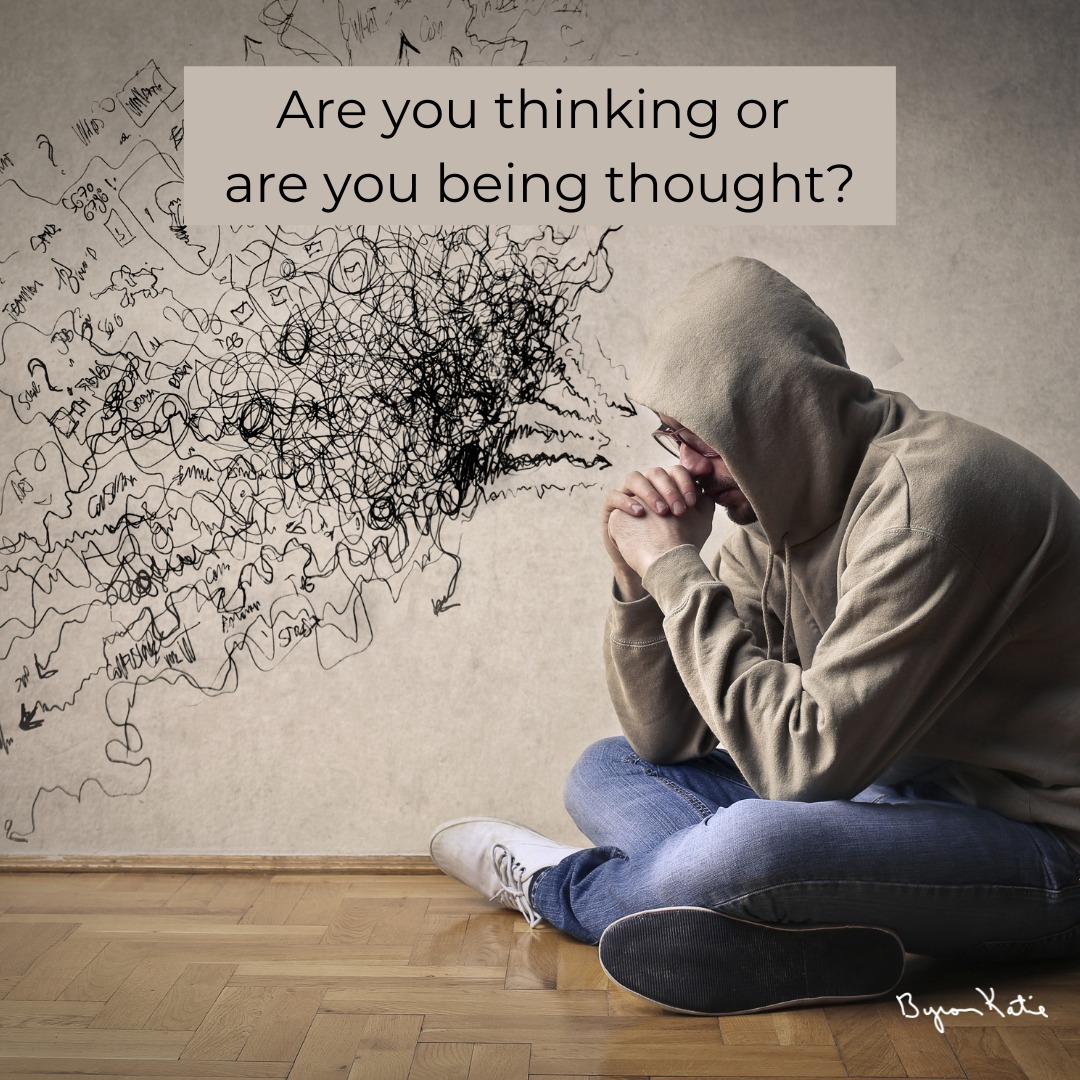
    For example, many years ago I had a young Muslim woman who joined an introduction I was taking on The Work of Byron Katie, and her belief she discovered when she asked herself, “what would someone believe in order to experience this” in relation to a certain feeling she was experiencing was “Life is Hard”. When she really enquired into the belief she realised her life, compared to her immigrant parents was really easy, fun and with many opportunities, but when she believed the thought she suffered and everything became difficult. Without the belief she was free to choose her own experience.

    Here is how a belief works:

    Whether conscious or unconscious we believe something to be true based on experience or we adopt beliefs from our parents.

    We gather EVIDENCE to prove it is correct, then the belief changes the way we FEEL, the way we REACT, our experience in our BODY,  whilst other THOUGHTS collect around it and we FILTER life, relationships, money, success and our own sense of sense through the EXPECTATIONS of this alive belief.

    As we gather evidence to prove the belief is correct is comes alive in us, and creates its own thought forms that are self perpetuating, which means when the opposite shows up the majority of the time we cannot see it or experience it as it is incongruent to the belief that is continuously gathering evidence to prove it is correct.

    Now this is a problem as it causes internal suffering and conflict as it argues with reality and our true nature. So what to do?

    The Great Undoing

    Over the years I have worked with many techniques and the one that really works to relieve suffering, whereby the belief when enquired into, let’s go of you, is The Work of Byron Katie: The Great Undoing.

    Time Magazine called it: “4 Questions to Inner Peace”

    Eckhart Tolle said: “Byron Katie’s Work is a great blessing for our planet. It acts like a razor-sharp sword that cuts through illusion and enables you to know for yourself the timeless essence of your being.” 

    Here is how it works:

    Start with something that stresses you. This could be an experience, something that someone does that annoys you or the like.

    1. Ask: What would someone believe in order to experience this?
    2. Write it Down as a short sentence
    3. Then ask from your head and answer from your heart: “Is it true?” Go deep within you and find if you can find the truth, not just your thinking.
    4. If it is a YES then ask: “Can I absolutely know this to be true?” in my heart of hearts. Then proceed to #5
    5. If it is a NO then ask: “How do I react, what happens to me when I think this thought?”
    6. Ask: “How do I treat myself, life, the other when I think this thought?”
    7. Ask: “Who would I be without this thought?” “How would I feel without this thought?” Really go inside and let the space without the thought come alive in you.
    8. Turn it around to opposite ie: To Reality (remember this is not about convincing yourself but meeting reality as it is)
    9. Turn it around to yourself ie: take the other out and add me (how do I treat myself in the same way I say the other is treating me?)
    10. Turn it around to me with the other ie: How do I treat the other in the same way I accuse the other of treating me?
    11. Where is each turnaround truer in your life? try and find as many examples as you can, so that your whole being gets to experience the reality of this.

    The Work of Byron Katie is an opportunity to return home to your true nature, love, an experience of peace and flow with life.

    If you would like to join us an enquire into your stressful thoughts as a group we welcome you. FOR MORE INFORMATION

  • Couples Competing is Rage

    Couples Competing is Rage

    Couples competing in an intimate relationship is rage!
    The power game goes something like this:

    • who is stronger?
    • who will win?
    • who will “give up first?”

    It is a game of hidden rage.

    There are many layers of rage but you can ask yourself: does my rage towards my partner stem from:

    • Unresolved issues when have in our relationship? Have I given my heartbreak, disappointment, needs a voice or has it turned into rage?
    • Collective rage of the gender I am ie women’s rage?
    • Systemic rage; Who is this rage loyal to in my family, or lineage?
    • Unresolved trauma?

    True intimacy cannot thrive in competition, someone has to fly the white flag and offer to change it.

  • Connect Before Correct

    Connect Before Correct

    Our body is much faster than our mind! 

    Have you ever noticed how you look for the story the other person’s body is saying to see if they are telling the truth or you are safe? Our body speaks louder than our words.

    Have you left your body behind in the conversation and simply trying to get your point across?

    Lately I have noticed this tendency, whether it is with couples, as a parent, with a colleague or someone new, to simply get our point across, to quickly correct another’s behaviour before we have connected with ourself. The problem with this is, that we actually don’t really know how another’s behaviour is really affecting us, we just think we do!

    Congruency with ourself, with our body is essential in being believed, being heard, being seen. Many people find themselves listening to the other’s body rather than their words. If the words and body are incongruent then they will believe the body over what they are being verbally told.

    Taking the time to let another’s behaviour touch the body, to be felt there means that we can simply show the other how their behaviour affects us by opening deeper into the feeling and exposing the body’s reaction. Not only are you connecting firstly with yourself, your body, but the other’s body connects with yours. How does that work you ask? Mirror neurons.

    Ever yawned and then half the room yawns? Ever held your breath in a group of people, and the group stops breathing wondering why you have stopped breathing, whilst they shift into mobilisation of the nervous system? We are wired to each other!

    Your body speaks louder than your words

    A Little Exercise

    When you are triggered by someone, allow your body to feel it, rather than going left brain straight away and verbally expressing it cognitively. Let the triggered feelings have room whilst dropping into the body, expand, let the tears come if there are, or the anger move within your body, simply directly experience the feeling and without words allowing this to be seen by the other….what happens?

    Then verbally add a feeling as you lean into your own inner world…

    Then verbally add a need that is not being met (not a solution) in that moment….

    Then ask if the other if they would be willing to….. (add your request here that may help to relieve the feeling) and satisfy the need…..

    And offer what you would be willing to do……(stay with your body)…

    Wait for the other and shift into feeling their body, active listen their feelings as a guess. If you see shock, or sadness in their body, feed back this to see if you are understanding them correctly…. (it looks like you are… (add the feeling here) when I say this?) at the same time stay close to your body, and come back to your feelings and needs and let them be shown through your body.

    Keep shifting between expressing mindfully and listening mindfully to yourself and the other.

    We don’t have influence until we have connection

    What changes when you shift into letting your body tell its story?


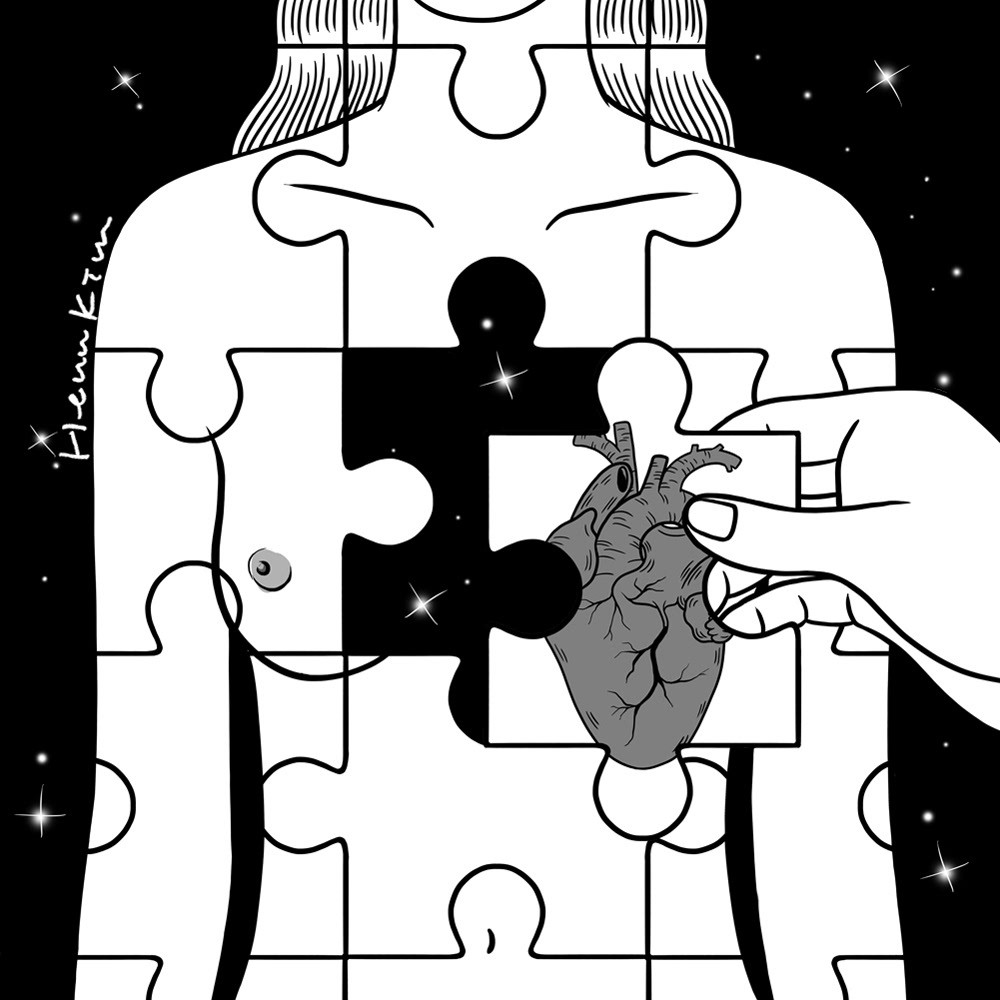
    Art by Henn Kim https://www.instagram.com/henn_kim/

  • Top 10 Keys to Couples Communication

    Top 10 Keys to Couples Communication

    Who taught you how to be in relationship? Who modelled communication skills to you?

    I don’t know about you but I rarely saw my parents communicate effectively. It was either avoided or it was blaming and shaming or power over employed.

    My parents fumbled their way through post war survival and had little in the way of communication skills, it was all about survival back then. Talk about needs and they look at me sideways, they simply got on with it. It is no wonder I had, and it is probably the same for many of you, little to no communication skills that kept me secure and connected. Without secure modelling our brain’s default is blaming and shaming, power over (aggressive), or non-assertive, or passive aggressive, in order to attempt get a need met! But there is a price one pays in the relationship.

    My own experience of communicating was completely lacking competent skills. The idea of confronting my partner or anyone else in regards to an issue I was experiencing in relation to them, caused 70% anxiety to the point that most of the time I would become non-assertive, my mother’s default. I later discovered that not talking triggers the other person’s nervous system. It was a losing strategy, and one where no one got their needs met!

    About 24 years ago I learned advanced communication skills developed by Dr Thomas Gordon, who was trained by the father of humanistic psychology, Carl Rogers, and was nominated three times for the noble peace prize for his work in communication. These skills saved me, and reduced my anxiety in confronting, disclosing and connecting in relationship to about 25%.

    What reduced it even more was learning neuroscience, attachment styles and arousal regulation from Dr Stan Tatkin as I trained as a psychobiological couple’s therapist. The combination is life changing so much so I would like to share a few gems that really helped me and I offer couples who come and see me. They are designed to help keep you safe, stay connected whilst maintaining the self-esteem of both partners in the relationship. It maintains a protective membrane, couple bubble, so we can be better in the world.

    10 Top Keys to Couple Communication

    1. We are in Each Other’s Care – Developing Governing Principles

    Most couples when I ask if they have shared principles that govern their relationship they look at me blankly. As a couple, in most cases, you share finances, assets, your body, your home, your time etc and yet we don’t treat it with the respect it requires – in many ways it is business. I know this doesn’t sound romantic, but the reality is shared governing principles keeps everyone safe.

    A couple is a cooperative team, it is pro-team based on mutuality, fairness, justice and sensitivity, rather than pro-self. For some this is a difficult adjustment as most have no modelling as to what a relationship based these principles looks like.

    You cannot resolve relationship issues by yourself. I often see this in therapy where one partner will come to therapy, but it is simply their interpretation of what is happening that they are coming to address, not necessarily what is happening in the relationship. Mutually agreed upon governing principles are co-created to move from a ‘Me’ gig to a ‘We’ gig. They become guiding parameters that in times of stress and conflict a couple fall back on to guide them, to ensure everyone is taken care of whilst maintaining an environment of safety. Click here for Ideas

    1. Love Brings You Together, Values Pull You Apart

    Joe Demartini created a values questionnaire to bring awareness to how values drive connection. If couples do not outline their values at the beginning of the relationship and they are different they will be the undoing of a relationship within 4 to 7 years of getting together, or when children have left home, if you have children. Values collisions are the most difficult to resolve as they are loyal to a bigger family system. They show up in relation to discipline, money, socialising governing the interaction between family and friends, mess and so much more.

    Here’s a few questions to get you started:

    1. How do you fill your space?
    2. How do you spend your time?
    3. How do you spend your energy?
    4. How do you spend your money?
    5. Where are you most organised?
    6. Where are you most reliable?
    7. What dominates your thoughts?
    8. What do you visualise most?
    9. What do you most often talk to yourself about?
    10. What do you most often talk to others about?
    11. What inspires you?
    12. What goals stand out in your life and have stood the test of time?
    13. What do you love to learn or read about most?

    Take the quiz and discuss with your partner, find commonalities and your differences too. The differences in values how can be negotiate around the values differences together? Click Here to listen to the podcast and take Brene Brown’s quiz 

    1. Agree to Fight Fair

    I once asked Dr Stan Tatkin about domestic violence in a relationship. His answer: “If you can regulate your nervous system outside the house, then violence in the house is an indulgence!” Check yourself at the door – would I be speaking to my best friend like this? If not, don’t talk to your partner like it. They are not there for you to emotional indulge so you feel better. There will be consequences as one person loses. Are you prepared to pay the price in your relationship of your indulgence?

    What are your rules of engagement? When you get stressed and trigger each other what have you mutually agreed to do. We all fight in some way in relationships, the key is managing it with fairness, justice and sensitivity. Here’s some tips:

    • Know the signs when those primitives get triggered and your body starts being mobilised into fight or flight. Catch it quick
    • Signal to stop, slow down and take a breath
    • Sit down – it is very difficult for the body to mobilise itself into sympathetic arousal when sitting down
    • Face each other – remember you love this person, and most people whose fights get out of control never look at each other. By facing each other you can read the facial expressions and also the breath and begin to regulate each other, it only takes a breath, as we are wired to each other.
    • Lower the tone of your voice. When we are stressed the cracking of the voice is often the first signal that we have been triggered. Our voice raises in sympathetic arousal therefore lowering it signals that we are beginning to down regulate and are less of a threat. This also supports an avoidantly attached partner not to get swamped in their nervous system too.
    • Decide whether this is a good time to have this discussion or can you come back to it when you are not so triggered. Don’t just walk away as for the ambivalent anxiously attached partner this signals you are abandoning them. This also gives you time for your ambassadors, the pre-frontal cortex, to come back online, as well as the amygdala to relax, so we can think clearly.
    • No name calling
    • No threatening the relationship. Over and over again I see a partner threatening, out of a sense of adequacy to get their needs met, to leave the relationship, or make the other leave. If there is one thing that will undermine the safety of a relationship is this tactic. Take it off the menu!
    1. Read Bodies – Your Body is Much Faster than Your Mind

    Our body tells us what is going on very quickly, and we react before the mind even knows what is going on. Watch for the signs that you have triggered your partner with something you have said or done. Backtrack and repair to bring them back online. Remember this is pro-team, not a pro-self gig and the other is in your care.

    Discover what you do to trigger your partner, when it happens try something different, even discuss it at times when you are both relaxed to develop strategies together.

    Signal to your partner when in distress, you could have a hand signal, a code word (pink unicorns…) that make you both laugh so the nervous systems down regulate. Notice that you can’t go into fight and flight and laugh at the same time!

    We all come with vulnerabilities and part of being a partner to your beloved is taking on their vulnerabilities. We are hurt by people and are healed by people.

    Watch when your partner gets agitated and restless (sympathetic arousal) or feels tired and swamped (para-sympathetic, dorsal vagal collapse) and ask yourself, what am I doing that is taking my partner to that place – what can I change?

    • Am I over sharing?
    • Am I talking from pro-self, thus using blaming language?
    • Am I not hearing what they are saying and need to shift gears before trying to get my needs met?
    • Am I talking loud and fast?
    • Am I going towards them too quickly and asking for things to happen straight away, thus swamping their nervous system?

    What could you begin to do different to keep everyone safe and connected?

    1. Repair Quickly

    You broke it you have to fix it. Sorry is not always enough. The reality is it is not repaired until it is repaired. Ruptures go into long term memory and they build up over time if not repaired, which cause a break down in a relationship. Just because you might feel fine about a situation that doesn’t mean that the other has recovered, so it is important to take the time to repair, even ask; “How can I make this up to you?” and follow through.

    If you are the partner that was hurt, check whether you are withholding relief to punish your partner for the hurt? What will this cost you and your relationship?

    1. It’s an Inside Job

    Until we check in with our own feelings and what is really happening inside then we have little to no way of communicating these and discovering the need that is trying to be met. As a partner my job is also to help my partner find out what is happening inside of them and their need inherent in behaviour.

    Self Empathy; developing that intra-intelligence is essential for interpersonal intelligence. Leaning into our feelings and beginning to give them a voice simply by using Declarative I-Messages signals that I am interested in what is happening inside me, which often inspires curiosity within our partner to find out what is happening for them too.

    Active Listening our feelings and then expressing them is the first start. Take the “YOU” out of the message you send to the other, it then takes out the blaming and shaming.

    You are in a two person system therefore there is a need to shift gears once you have declared your feelings and listen for the others feelings and needs once you deliver a message. Can you listen for your partners feelings and needs and feedback that back to them to see if you are understanding them correctly. The beauty of this is that if you are not quite getting what is happening for the other, they will correct you and give you more insight into how they are feeling. Then feedback your further understanding again, then come back to your feelings and needs and communicate them.

    Communication involves two ingredients; sending and receiving. Both are essential to effective communication as a team.

    1. There is Never A Conflict of Needs

    There is only conflict of solutions. Your solution may not work for the other as it doesn’t meet their need, therefore laying the needs on the table straight up is essential to brainstorm mutually agreed upon solutions. No one loses then, and there is no pay back if someone compromises to meet the others needs at the expense of their own.

    When both own the problem then identifying the needs is essential before any solution can even identified through brainstorming. Negotiation is more supportive than compromise as a team.

    See the Needs Inventory HERE

    1. Make it Clear and Concise

    When we ramble and try and explain what is internally happening through a long winded dialogue we swamp others nervous systems.

    So here’s a few tips:

    • Make your request short and simple.
    • Avoidants switch off, you can see them glaze over, when there is too much information, it is not personal, it is simply that their nervous system gets swamped.
    • For the avoidant it is important to help regulate an ambivalent anxious partner by not letting them ramble too long, catch it before you turn off, otherwise your partner can feel you leave and it triggers them. Interrupt them, they don’t mind, in fact they expect as they are external regulators and need the other to calm the nervous system as they can’t always do it themselves.
    • For an ambivalent anxiously attached too little information leaves them guessing and the negative bias in the brain fills in the gaps. Therefore concise, clear and to the point sentences work for both partners.
    1. Take out the “You” Messages instead employ I-Messages

    Identifying whose problem it is, is fundamental in engaging certain communication skills. To simplify this if we own the problem then we have to come back to active listening our own feelings, needs and facts before we can communicate them clearly.

    Our default when we are disconnected from ourself is to make it about the other, but often the issue really is simply trying to get a need met. Self-disclosure starts with leaning into your own feelings first and owning that I am experiencing something, keeping the message close to yourself rather than trying to make the other wrong.

    When addressing a problem that you have we need to employ what is called a Confrontive I-Message which involves discovering the feelings that are being triggered, the actual fact (what you can see, touch, taste, and hear not your judgement or interpretation) and then the tangible effect a behaviour has on you. Furthermore, we have to be willing to offer something and then request something from the other.

    The Confrontive I-Message equation is =

    Your Feeling + Fact (What you can see, hear, touch not your judgement) + Tangible Effect (a behaviour has on you) + What you would be willing to Do + Your Request to the Other.

    For example

    I am really concerned (Feeling) about the way we try and resolve our issues while driving (fact) as I get overwhelmed (feeling) trying to concentrate on driving and talking at the same (Tangible Effect). I would be willing to make some time throughout the week to talk about our relationship, even create a ritual (Your Willingness). I am wondering if you would be willing to find a different way together of discussing the difficulties when they arise? (Your Request)”.

    Then we shift gears and listen for the other’s feelings and needs, feed that back as a question to ensure you are hearing them correctly then create an I-Message that is adjusted based on their response after listening to what changes in you.

    Click here for more

    1. Connection Rituals

    Nervous systems get triggered when you move towards and away from each other. We have so much we have to address throughout the day and not taking care of your relationship so it takes care of you, is an immense oversight. The biggest predictor of longevity is the healthy relationships we have in our life.

    Your couple bubble is the place of nourishment, inspiration, security, passion and whatever else you co-create together. It is the most important part of your life and despite a culture that values independence over collaboration and cooperation, it a daily practice to take care of your togetherness, the connection.

    How couples do this can include “connection rituals”. These include co-creating connecting in the morning before you launch into the world of kids, work, life. It can be a small ritual of making breakfast together, snuggling before anyone hops out of the bed, showering together. Whatever ritual you decide on it is done daily without fail. We call this the “Launching Ritual”.

    Moving in and out of the home creates distress for some, especially ambivalent-anxiously attached, therefore we have to be particularly mindful to welcome each other home, especially after a day outside of the home. The first thing you do when arriving home is to find each other and give each other a hug. Now this is not an everyday kind of hug. This is a “Welcome Home Hug” whereby you don’t let go of each other until you feel the others nervous system, and your own completely relax. You are using your connection to down regulate the stress the other has experienced throughout the day so that distress doesn’t spill over into the home environment.

    Thirdly we have a Landing the Day ritual, whereby you co-create a ritual that connects you at the end of the day. That could be reading together in bed, having dinner together, snuggling up on the couch etc. Whatever ritual decided upon it is done daily. We call this the “Landing Ritual”.

    There is a problem though as often we begin to feel so good in a relationship that we might just let go of the rituals, but I can guarantee the issues will crept in and fill the gap in between you both. These rituals sustain the connectedness and are not to be taken for granted.

    In summary, both parties contribute to the space between, therefore a question you can ask yourself is; “how am I contributing to the safety, passion, and vitality of this relationship?” and take action.

    Bibliography

    Living into Our Values podcast and Quiz https://brenebrown.com/podcast/living-into-our-values/

    Demartini, John: The Demartini Value Determination Process: Know Yourself. Be Yourself Click here

    The Authentic Communicator training program Click here

  • Longing

    Longing

    LONGING

     What is your heart’s deepest longing?

    Over the last couple of years many of us have longed to connect with friends, to have the freedom to visit them, to travel overseas and resume a natural rhythm and autonomy. Our longing has many faces. It tries to get our attention, and yet we often push it to the recesses of our heart, trying to rationalise it away. Yet the more we try to banish it from our hearts the more it returns.

    What You Want, Wants You.

    Have you ever contemplated why we long for something in particular, why it doesn’t let go of you?

    Our deepest longing comes from a movement in the soul beyond the ego, often an unconscious invite from our psyche, and if denied one’s soul finds a myriad of ways to get our attention. It can be a systemic longing, whereby the family soul longs for resolution or acknowledgement. Or it can be an unfulfilled part of ourselves longing to come into fruition more in our life. Longing for the truth, understanding, to be seen, heard or have a particular need being fully met. Or it could be a longing to connect with someone in particular as a way of soothing that part in oneself.

    However our longing, it simply connects us from what has been banished.

    One might ask oneself:

    • What are the barriers I have built up against longing to avoid disappointment, hurt, grief, heartbreak?
    • What story have I employed to protect myself from connecting?
    • How have I packaged up my longing and stored it away?
    • What won’t I give myself permission to live?
    • What kind of life am I living keeping this deep longing at bay?

    Our Longing Connects Us

    What if our difficult behaviour was trying to get a need met?

    I recently found myself dealing with values collisions conflict when reconnecting with family again after years of separation. My longing to connect with family after such a long time apart was immense, yet disguised as independence, sadness, lack of motivation, depression, exhaustion and the like. I needed the nourishment of family connection.

    Longing for connection can be packaged up in challenging behaviour, strategies, a myriad of bids for connection, which can be hard to decipher. At times these behaviours trigger nervous systems, old wounds, beliefs that are loyal to sub-groups in families, yet the need for connection is fundamental in the behaviour.

    Even our judgements about one another keep us connected!.

    For example ‘in my hatred I remain connected to you’. It takes a lot of energy to keep another at a distance, to recycle the same disdainful story of hurt about the other, which in turn keeps us connected. We all have a need trying to be met in challenging behaviour.

    Resistance empowers what is being resisted.

    Feelings of disappointment point to longing unfulfilled, often appearing as a result of our connection cues not being decoded in a way that meets our needs. Our old attachment injuries become mobilised. We reject, isolate, withdraw and/or punish displaying ambivalent-anxiously attached traits. We are quite creative in our responses!

    Our unmet longing can be painful, yet the key is to find the fundamental underlying need that is trying to be met, and in turn a new way of communicating that need to ourself and then others. There is never a conflict of needs, only a conflict of solutions!

    Stories About Each Other Cause Suffering

    Over time the inability to identify our needs trying to be met and to communicate these to ourself and others creates stories about others that support our inability to reach out, to ask for what we need, to discuss heart break. Our unquestioned beliefs cause suffering and more longing. To simply ask the questions: Is it true? Can I absolutely know this thought about the other to be true? Whilst answering from your heart.

    Stories about each other can be created from generations of disappointment. Take a moment to look at the disappointment you carry for your gender in your family towards the opposite sex.

    • What did your mother long for? Was she disappointed and enraged with your father? If so, what stories were adopted from her about the opposite sex?
    • What did your father long for? Was he disappointed and enraged towards your mother? If so, what stories were adopted from him about the opposite sex?
    • Who are you loyal to? How does this play out in your relationships?
    • What sub-groups were formed in your family? Whose longing did they fulfil? What was the unfulfilled need that was trying to be met?

    Who would you be without these stressful stories? What connections would you make without them?

    We Inherent Our Nervous System

    Whose longing is it?

    Not only do we at times inherit our longing but we also inherit our nervous system. Imagine our parents being brought up in war times, food scarcity, and the anxiety created from those experiences they carried that we responded to as children. Systemic trauma alters how we parent. What happened to our parents and what happened to their parents is told in our body. Our bodies are the family story. In turn how we were parented creates survival strategies, known as attachment styles endeavouring to get our needs met, yet each comes with a longing embedded deeply within it.

    Attachment styles are created many generations back.

    For an ambivalent-anxiously attached person, systemic trauma is often the theme in the family lineage. For someone who is more avoidant-anxiously attached, loss, grief appears in the family lineage.

    Ambivalent-anxiously attached, are external regulators, ie ‘you do me’, yet will reject the other, blame and punish. Their greatest fear is they will be rejected and abandoned so they get in before anyone else does, yet their greatest longing is for the needy part to be fully met and held, to be completely got. Getting those needs met for a ‘wave’ as we colloquially address these styles, can be quite dramatic at times. They fear there needs are ‘too much’ for others to hold. The longing is simply to be held and met in the depth of the need.

    An Avoidant-anxious person are internal regulators, ie ‘you do you’ and I do me’. They separate, withdraw and isolate themself as they long for space, fearing being swamped by other’s needs, yet cannot fully regulate themself independently. Yet in truth longing for connection and someone to come and get them by gently inviting them off their self-imposed island.

    Securely attached individuals have enough secure interactions with parents where their needs were met that they are capable of going and getting their needs met, by talking about it, inviting the other into connection having developed an intrapersonal intelligence that can be communicated easily with themselves and others.

    Looking Longing in the Eyes

    “The bigger the judgement, the bigger the longing” Bertold Ulsamer

    Contemplating Bertold Ulsamer’s quote whilst reflecting on a Family Constellation workshop I took a couple of months ago, I was reminded how we are strengthened by looking at longing in the eyes, inviting it in, opening to it, surrendering to the feelings, rather than quashing them. Workshop participants were invited to look deeply in the eyes of longing. Longing revealed its true nature, it came alive in them, strengthened them as they stopped running from it and expanded their hearts. We build walls around our longing and judge anything, or anyone that comes close at times.

    • What would happen if you stopped running away from your longing to connect?
    • What if you were honest with yourself about all the strategies you have employed to keep yourself safe from connecting?

    As Richard Schwartz highlights in Internal Family Systems Therapy, we have an internal ecology of parts, each doing different jobs, some of these are overly protective and get in the way of our longing and of reaching out.

    In acknowledging this, the invite is to look where the most judgement is and look at it in the eyes.

    • How does that protective strategy work within you?
    • What happens within you when you thank those parts who have guarded you from getting disappointed in unmet longing?
    • What does this part protect you from?

    What happens when you give that part, that was being protected room space within you, to feel, breathe, be seen, be understood, come alive in oneself. Let it tell its story through your own body. Opening to the feelings, yearning, hurt, fears simply letting your whole being experience the array of feelings inherent in this moment in your life revealed.

    • What does it need from you now that it didn’t get back then?
    • What happens to that part of you that was being protected, when that need is offered?
    • What changes in your being in relation to the world? 
    • What quietens and opens in you when you soothe that part calling?

    Our longing is a pull to connect to parts of ourself calling, to life in its fullness and to each other.

    What would happen if you fully opened to your longing?

  • Going to Pieces without Falling Apart

    Going to Pieces without Falling Apart

    Originally I heard the term, ‘going to pieces without falling apart’ on reading the book of the same name by Buddhist Psychologist Mark Epstein in early 2000. Combining western psychology with buddhist philosophy he highlighted that Western psychology has promised fulfilment through engaging and strengthening the ego. We are taught that the ideal self is a strong, individuated, constructed and reinforced over a lifetime. Yet the truth is this cannot be maintained over time. Happiness comes from letting go!  Epstein states “happiness that we seek depends on our ability to balance the ego’s need to do with our inherent capacity to be.

    This is not a book review but a compassionate cry to give yourself a break! To stop! As a therapist of over 30 years, I have seen over the last months clients, and therapists themselves including myself, experience burn out and stress breakdowns. There is a fundamental need to relax the ever-vigilant mind in order to experience the freedom that comes only from relinquishing control, our endless pursuit of how we think it should be.

    Epstein, in the introduction of his book, tells a story about an “eager professor who sought wisdom from an old Zen master. The master offered him tea and, on the professor’s acceptance, poured the tea into a cup. To the professor’s dismay, however the master kept pouring the tea into an overflowing cup, even as the tea spreads across the floor. A mind that is full cannot take in anything new, the master explained. “Like the cup you are full of opinions and preconceptions. “Wisdom and happiness are to be found only by emptying one’s cup.

    We are full!

    Two years we have spent surviving, be it COVID lockdowns, losing loved ones suddenly, an ever changing political landscape, financial uncertainty, the devastation caused by floods, endless work without seeing family and loved ones who live overseas, and the constant need to make new decisions rather than engage our automated brain and COVID itself. It takes an enormous amount of energy, focus and adrenaline to get us through, and now we are experiencing the effects of the last two years. Exhaustion! We cannot take anything else in. This exhaustion appears as deep emotional and physical lethargy, as though our internal foundations are untethered and our emotional landscape is in pieces. Some describe it as though they have post traumatic stress syndrome (PTSD) symptoms. A mixture of grief, frozenness, overwhelm, anxiety, hopelessness, and emotional and physical fatigue. It feels like we are falling apart.

    The key to going to pieces without falling apart is surrender. The more we try and fight the feelings, go against what is innately present, the more it feels like we are falling apart, and we cannot control the emerging unchartered emotional landscape.

    Clients often seek out solutions to this state via counselling, yet then the ego continues to do, plan, strategize, when one’s whole being is telling one to stop and rest. We cannot continue what we are doing without changing something, scaling what we are doing down for a time, changing the scenery, and giving ourselves novel experiences. For some, the time it takes to come home to oneself, feeling like you have solid foundations again, may take longer than others, this depends on the level of self care, the difficulties you have encountered over the last two years as well as the ongoing challenges.


    How does the ego surrender when we have let it rule for so long?

    The truth is there is always a little voice that knows what is needed but is overridden in pursuit of this idea of good, to achieve, to become something, someone. Quietly it tugs a little and then a little harder, and if not listening even harder. It rattles the cages of our soul until we cannot ignore it any longer. We have to surrender or fall apart. Instead of this internal war an easier way is to listen to that little loving voice that gently tries to guides you, even if you don’t quite know where it will lead you, it has your best intentions at heart.


    In support of that little inner voice here is a little help….

    • Stop and Rest and do nothing
    • Meditate
    • Eat well, yet lightly
    • Directly experience feelings, rather than trying to change them, or think you way out of them
    • Talk to your soul, let your soul talk to you – find a way through poetry, art, nature, movement, creative visualisation
    • Do the things you love daily, even if it is one little thing like putting on a particular lotion, or drinking from a favourite cup, or taking your shoes off and burying them in fresh grass, make room for it
    • Reach out for support – we are wired to each other and were never designed to do it alone
    • Take a break away somewhere you haven’t been before
    • Hang out in nature – when was the last time you watched the clouds sail by?
    • Swim in the ocean – water relaxes us on so many levels
    • Walk along the beach
    • Come back to that one practice that you know brings you home in yourself.
    • When there is energy, let yourself grieve
    • With those habitual thoughts causing suffering, question them – is it true? Who would I be without this thought?
    • Stop pressuring yourself to make those decisions when the time is right decisions get made
    • Do that thing that you have always wanted to do, be it travel, a particular project, hobby or career. Do it, as it wants you.
    • Befriend the part of you that has had enough. Lean into them, find their need, let them have a voice and a home in you, by embracing them exactly as they are. Their feelings are correct.
    • Hang out with your favourite people
    • REST is paramount right now, the rest happens when needed.


    So how do you go to pieces without falling apart?

    So if you are too tired to speak, sit next to me, for I too am fluent in silence” R Arnold

    Let go, surrender, stop fighting those feelings, stop and rest! Your being knows how to bring you home to yourself.

    As Mr Curly said to Vasco Pyjamas: “...Tiredness has become the most suppressed feeling in the world. Everywhere we see people overcoming their exhaustion and pushing on with intensity – cultivating the great mass mania which all around is making life so hard and ugly – so cruel and mingles – so utterly graceless – and being congratulated for overcoming it and pushing it deep down inside themselves as it it were a virtue to do this. And of course Vasco, you know what happens when such strong and natural feelings are denied – they turn into the most powerful and bitter poisons with dreadful consequences. We live in a world of these consequences and then wonder why we are so unhappy. So I greatly urge you Vasvo, do as we do in Curly Flat – learn to curl up and rest – feel your noble tiredness – learn about it and make generous a place for it in your life and enjoyment will surely follow. I repeat: it’s worth doing nothing and having a rest. yours sleepily Mr Curly” By Leunig

    _________

    Bibliography

    Epstein, Mark (1999) ‘Going to Pieces without Falling Apart: A Buddhist Perspective on Wholeness’, R Wyler & Co, USA

    Rediger, Jeffrey, M.D., M.DIV. LESTON HAVENS, M.D. ‘Going to Pieces without Falling Apart: A Buddhist Perspective on Wholeness Book review’

    Cambridge Hospital Cambridge, MA 02139

    Leunig: The Curly Pyjama Letters