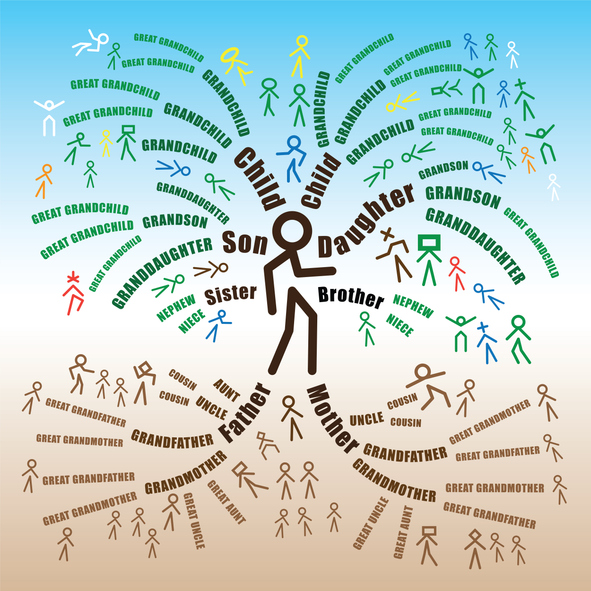
The idea that we are all connected becomes especially clear when we look at families and communities as living systems rather than just collections of individuals. Within a family, each person’s experiences, beliefs, and emotional patterns ripple outward, subtly shaping the behaviour and wellbeing of others—sometimes across generations. A parent’s unresolved stress can influence a child’s sense of safety; a grandparent’s migration story can shape values around survival, sacrifice, or belonging.
These dynamics don’t exist in isolation, because families themselves are embedded within larger systems like culture, economy, and community networks. Communities, in turn, reinforce or challenge family patterns through shared norms, support structures, and collective experiences. When these systems are healthy and responsive, they can strengthen individuals by providing connection, identity, and resilience. When they are strained or fractured, they can perpetuate cycles of disadvantage or disconnection. In this way, individuals are both shaped by and contributors to the systems they belong to, constantly influencing and being influenced in an ongoing exchange.
In this way, individuals are both shaped by and contributors to the systems they belong to, constantly influencing and being influenced in an ongoing exchange—and this interconnectedness extends beyond human systems to include the natural environment, where our wellbeing is intimately tied to the health of the ecosystems we depend on, from the air we breathe to the land and resources that sustain life.
Family Constellations is a therapeutic approach that explores how hidden family dynamics, loyalties, and unresolved traumas shape our present-day behaviours, emotions, and relationships. Developed by Bert Hellinger, this method works on the premise that individuals are deeply connected to their family system across generations, often unconsciously carrying burdens that do not originate with them.
In my article “I Will Do It for You, Even If It Costs Me,” I highlight one of the central themes in Family Constellations work: the unconscious loyalty that leads individuals to take on pain, hardship, or limitation on behalf of others in their family system. This phenomenon often manifests as a silent inner contract—an inherited belief that says, “If you suffered, I will suffer too,” or “I will carry this so you don’t have to.” While rooted in love and belonging, these patterns can become deeply limiting.
The article illustrates how such loyalties may show up in everyday life. A person might struggle financially despite having opportunities, remain stuck in unhealthy relationships, or experience persistent feelings of guilt or anxiety without clear cause. Through the lens of Family Constellations, these struggles are not random; they may be expressions of unresolved family entanglements, where one family member unconsciously “represents” another’s fate.
A key insight from the article is the idea that love, in these cases, becomes distorted. Instead of supporting growth and vitality, it binds individuals to past suffering. Family Constellations seeks to gently uncover these dynamics, often through experiential exercises where participants represent family members and reveal hidden connections. This process allows individuals to see their situation from a broader systemic perspective.
Healing in this context does not come from rejecting one’s family, but from acknowledging what belongs to whom. Family Constellations emphasises that true resolution arises when individuals can honour their family members’ experiences without taking them on as their own. By doing so, they restore a natural order within the system—where each person carries their own fate, and love can flow more freely.
Ultimately, “I Will Do It for You, Even If It Costs Me”sheds light on the powerful, often invisible forces of familial love and loyalty. It reminds us that while these bonds are essential to our sense of belonging, they can also limit us when expressed unconsciously. Family Constellations offers a pathway to transform these inherited patterns, enabling individuals to live more fully in their own lives rather than in service of unresolved pasts.
SHORT VISUALISATION EXERCISE
Find a quiet place where you can sit comfortably and bring your attention inward. Gently acknowledge that you are not alone, even in this moment—you are connected to a wider system that stands behind you. In your mind’s eye, imagine your family system: your parents behind you, and behind them their parents, extending back through generations. There is no need to know their stories in detail—simply sense their presence. Notice that life has flowed through each of them to reach you. Take a moment to internally say, “I honour your lives, your struggles, and your gifts. What belongs to you, I leave with you. What has been given in love, I receive with gratitude.”
Now, expand your awareness to include the communities that have shaped you—friends, teachers, cultures, and places that have supported your growth. Acknowledge their influence and silently thank them for what they have contributed. Allow yourself to feel supported, as if you are standing within a field of connection rather than on your own.
Finally, bring in the natural world around you. Imagine the ground beneath your feet, steady and holding you, the air filling your lungs, and the wider living environment that sustains your body and energy each day. Sense that you are part of this larger web of life, not separate from it. As you breathe, allow a feeling of alignment to settle in your body—supported from behind, connected around you, and grounded below. From this place, gently return to your day, carrying a quiet sense of strength, belonging, and clarity.